

Vision conditions
Cataract
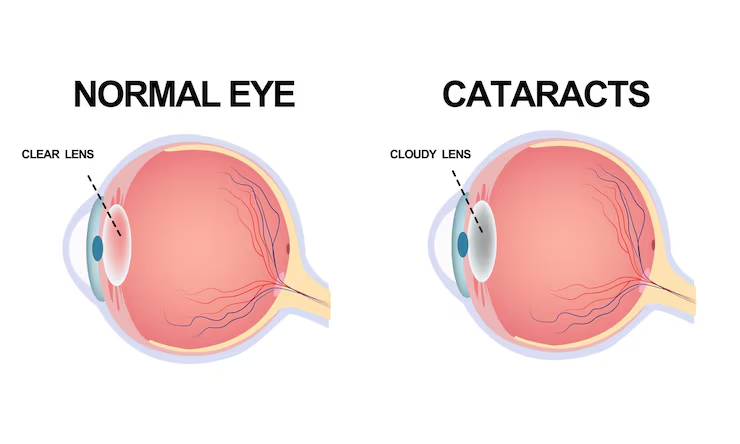
A cataract occurs when the clear lens of your eye becomes cloudy, making vision blurred or hazy. It can develop gradually with age, affecting reading, driving, or night vision. Early assessment helps determine when treatment may be beneficial.
- 30%
Adults over 45
- 80%
Adults over 60
- >25,000
Surgeries performed
What happens when you have a Cataract
Understanding lens clouding
Inside each eye is a natural lens that helps focus light. Over time, this lens can become cloudy as proteins within it change — a process known as cataract formation. Most develop slowly and can be effectively treated once they interfere with daily activities.
Adults aged 60+ — Over 80%
More than 80% of people aged 60 and above in Singapore show some degree of cataract formation.
Surgical outcome — Safe and routine
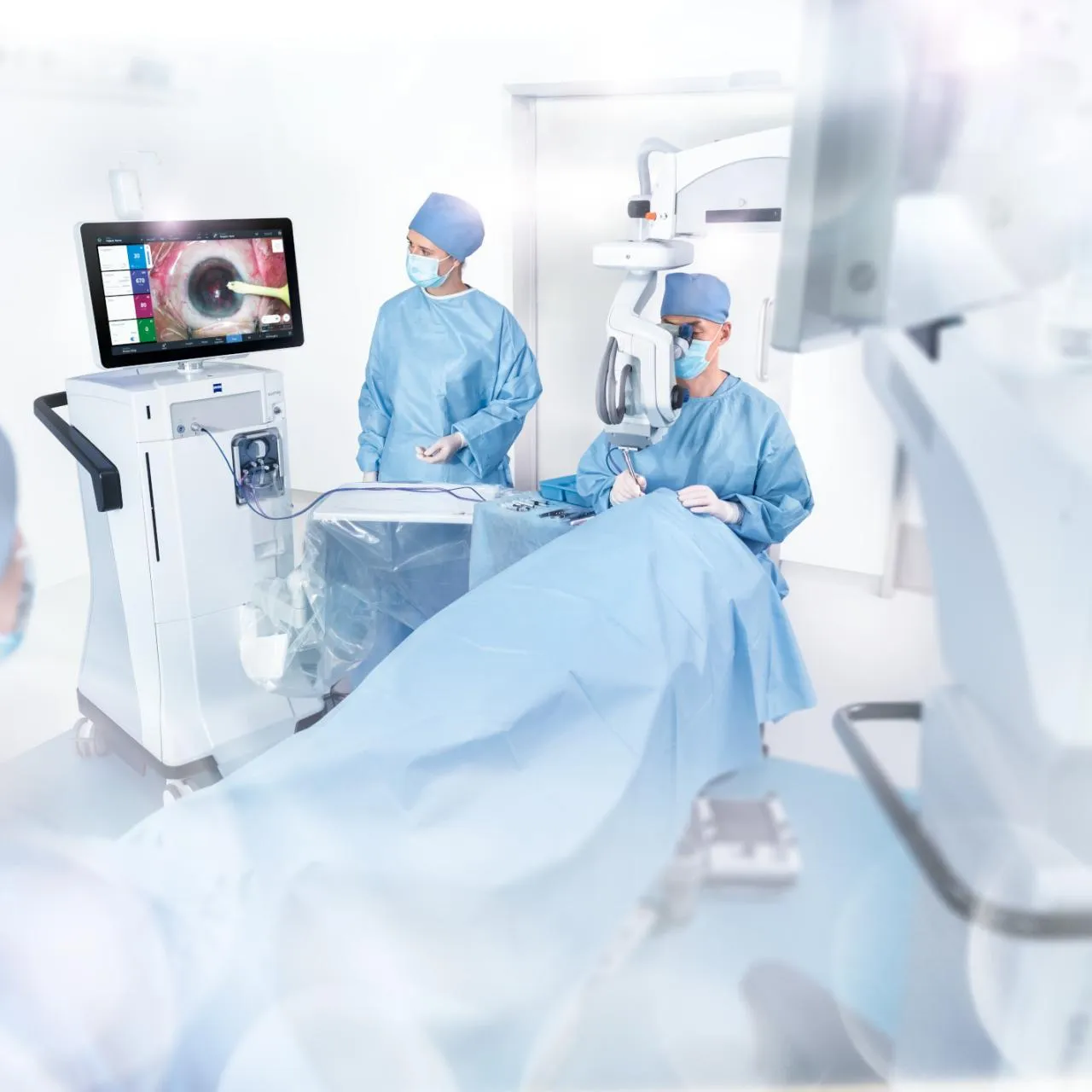
Modern cataract surgery is one of the most frequently performed eye procedures worldwide, with a high safety profile and reliable vision outcomes when performed appropriately.
Recognising gradual changes
When to arrange an eye evaluation
Common Symptoms of Cataract
- Blurred or cloudy vision
- Sensitivity to bright light or glare
- Difficulty seeing near objects/words
- Poor night vision or double images in one eye
Cataracts can develop gradually, and their symptoms may not be immediately noticeable. Common signs that may indicate cataract formation include:
Does this sound like you? Book an assessment today
Ways to manage and treat Cataract
Restoring clear vision safely
Treatment is guided by the degree of vision change and your daily needs. After thorough evaluation, your ophthalmologist may advise:
Patient voices
4.9 Stars on Google.
Real stories from the thousands of patients who have trusted us with their sight.
“Dr Huang literally saved my eyesight. After 3 doctors misdiagnosed my severe eye infection in Bali and things were getting worse, I booked a flight to Singapore and set an appointment with Dr Huang. Within 5 minutes of sitting down, he already correctly diagnosed my rare condition and began laying out my treatment plan.”

“One of the best decisions I’ve made! Dr Phi answered all my doubts and worries, and made sure that I’m assured on the procedure process and kindly explain to me every step that is he doing during the procedure itself, which is something I’m so appreciative for!”

“I’d like to thank Dr. Huang for being such a wonderful doctor through my process of getting perfect vision. He was so assuring and put me at ease throughout every step of the way, and conducted my procedure with utmost professionalism and expertise. Post-surgery care was also very well conducted; any concerns I had were addressed and allayed. Thank you so much for the great experience amidst what was initially a scary thing for me.”

I recently had TransPRK procedure done by Dr. Philemon and couldn’t have asked for a better experience. From the very first consultation, he took the time to explain every step in detail, making sure I understood what to expect. He’s very thorough and meticulous. You can tell he cares about his patients and takes pride in doing everything perfectly.
What stood out most was how genuine and attentive he is. He checked in with me before and after the procedure, made sure all my questions were answered, and went above and beyond to make sure I felt cared for.
It’s rare to find someone who’s both exceptionally professional and sincerely compassionate. I sincerely recommend Dr. Philemon to anyone considering refractive surgery.

I’m incredibly grateful to Dr Philemon Huang for the outstanding care and results he delivered. I underwent IOL implant surgery with Dr Huang, and it completely transformed my vision—from being unable to see without glasses to achieving 20/20 vision after surgery.
Dr Huang was clear, professional, and thorough in his recommendations, explaining why LASIK wasn’t suitable for me and why the IOL approach was the best option. His expertise and confidence made the entire process feel reassuring, and the results speak for themselves.
Thank you, Dr Philemon Huang, for your exceptional skill and care. I couldn’t be happier with the outcome.

Clarifying Your Concerns
Frequently Asked Questions
We understand that vision correction is a significant decision. Here are honest, transparent answers to the questions we hear most often from our patients.
A cataract is the clouding of the eye’s natural lens, which can cause blurry or dull vision. It often develops gradually with age, but it can also be caused by other factors such as injury, certain medications, or medical conditions.
Symptoms of cataracts include blurry vision, difficulty seeing at night, glare or halos around lights, and a general decline in vision clarity, especially for near objects. If you notice these changes, it’s important to consult an eye care professional.
Treatment depends on the severity of the cataract. Early-stage cataracts can be managed with updated glasses prescriptions. However, if vision is significantly affected, cataract surgery with an intraocular lens implant is often recommended.
Cataract surgery involves removing the cloudy natural lens and replacing it with a clear artificial lens. This procedure is typically quick, safe, and can significantly improve vision.
Both methods are highly safe. However, the bladeless approach (FLACS) provides enhanced precision in creating the capsule opening and uses slightly less ultrasound energy to remove the cataract. This can be particularly beneficial for patients with complex cataracts.
Most patients experience clearer vision within 24 to 48 hours. While you can return to light activities in 2–3 days, full stabilization of the eye usually takes about 4 to 6 weeks. Dryness recovery and full adaptation can take up to 6 months. Avoid strenuous exercise and swimming for at least 1-2 weeks post-surgery.