
Expert Care for Every Stage of Your Child’s Growth.
Eye Examination for Kids
Regular eye examinations for children help detect vision problems early, when they are easiest to treat. Good vision supports learning, reading and safe play at home and in school.
Common signs needing attention
Who should get an eye examination?
- A parent, teacher or caregiver notices squinting, eye rubbing or sitting very close to screens or books.
- There is a family history of lazy eye (amblyopia), squint (strabismus) or high spectacle power.
- One eye appears to turn in or out, or the eyes do not seem to move together.
- A child was born premature, has developmental delays or other medical conditions linked to eye problems.
- Vision screening at school or at a clinic was “not passed” or could not be completed.
Children benefit from routine eye checks even if they do not complain of problems.
An eye examination is recommended if:
What is involved in an eye examination for kids?
Step‑by‑step, child‑friendly assessment
The examination is adjusted to the child’s age and attention span, and usually feels like a series of simple games.
Typical visit flow:
-
History and visual behaviour
The clinician asks about birth history, general health, family eye history and any concerns at home or in school.
-
Vision and alignment checks
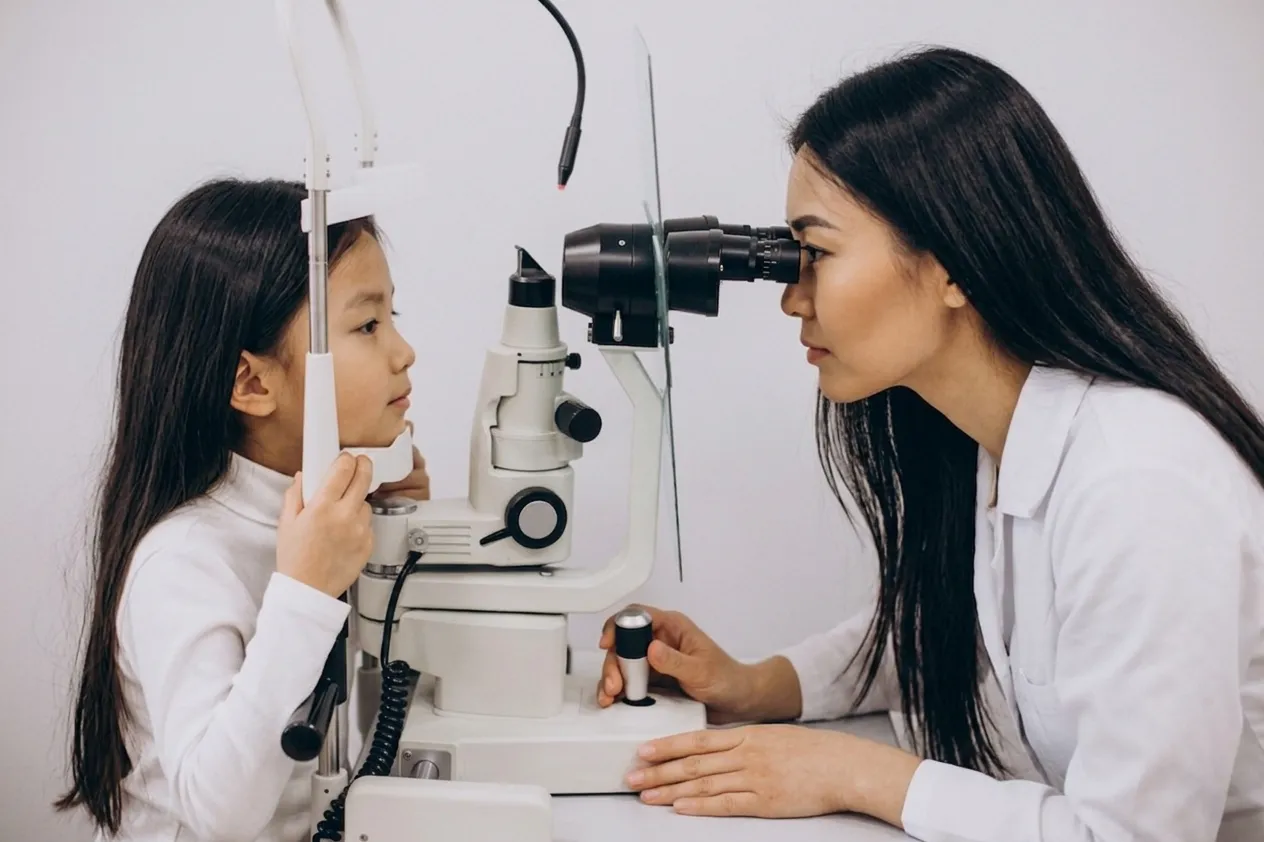
Age‑appropriate charts, picture tests or fixation targets are used to measure vision in each eye. Eye movements and alignment are checked to look for squint or lazy eye.
-
Eye health examination
The front of the eyes, pupils, red reflex and back of the eyes (retina and optic nerve) are examined, often after using dilating drops to allow accurate refraction.
After the assessment, the findings and any recommended treatment are discussed with parents or caregivers in clear, simple language.
Types of treatment and follow‑up
Matching care to each child’s needs
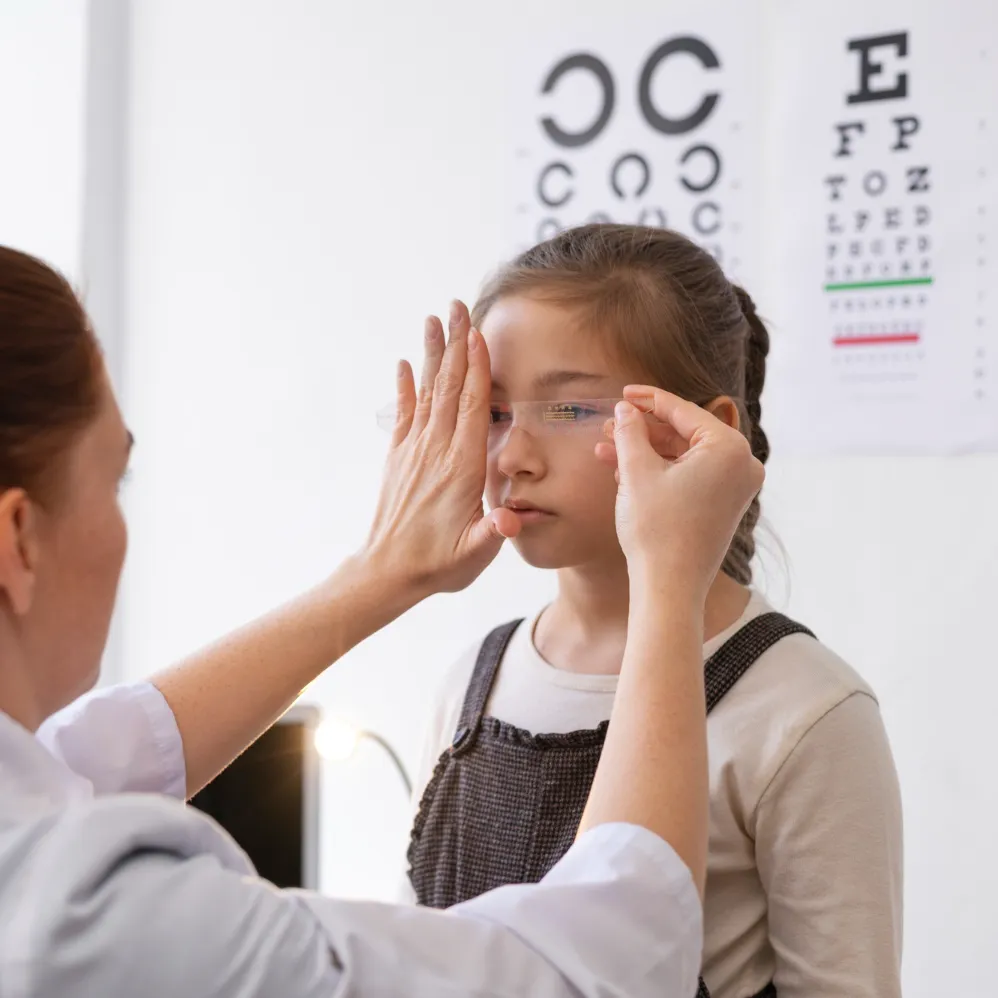
Not all children need treatment. When it is needed, options are usually straightforward and well‑tolerated. Common approaches include:
Smooth recovery timeline
What to expect during recovery
Recovery depends on the type of treatment provided. Some children may only need periodic monitoring, while others may need to adjust to new glasses or therapy. Here's what to expect for each type of treatment.
Immediately After Treatment
Treatment for pediatric eye conditions may involve an adjustment period for new glasses, patching for amblyopia, or a prescribed schedule of strabismus exercises.
The First Few Days to Weeks
Within the first few days, your child continues their prescribed patching or exercise routine, while any post-surgical swelling or bruising is monitored during scheduled clinical reviews.
Full Recovery
Over the following weeks, your child’s progress is evaluated through regular clinical monitoring to assess vision development and adjust therapy or surgical follow-up as required.
Patient voices
4.9 Stars on Google.
Real stories from the thousands of patients who have trusted us with their sight.
“Dr Huang literally saved my eyesight. After 3 doctors misdiagnosed my severe eye infection in Bali and things were getting worse, I booked a flight to Singapore and set an appointment with Dr Huang. Within 5 minutes of sitting down, he already correctly diagnosed my rare condition and began laying out my treatment plan.”

“One of the best decisions I’ve made! Dr Phi answered all my doubts and worries, and made sure that I’m assured on the procedure process and kindly explain to me every step that is he doing during the procedure itself, which is something I’m so appreciative for!”

“I’d like to thank Dr. Huang for being such a wonderful doctor through my process of getting perfect vision. He was so assuring and put me at ease throughout every step of the way, and conducted my procedure with utmost professionalism and expertise. Post-surgery care was also very well conducted; any concerns I had were addressed and allayed. Thank you so much for the great experience amidst what was initially a scary thing for me.”

I recently had TransPRK procedure done by Dr. Philemon and couldn’t have asked for a better experience. From the very first consultation, he took the time to explain every step in detail, making sure I understood what to expect. He’s very thorough and meticulous. You can tell he cares about his patients and takes pride in doing everything perfectly.
What stood out most was how genuine and attentive he is. He checked in with me before and after the procedure, made sure all my questions were answered, and went above and beyond to make sure I felt cared for.
It’s rare to find someone who’s both exceptionally professional and sincerely compassionate. I sincerely recommend Dr. Philemon to anyone considering refractive surgery.

I’m incredibly grateful to Dr Philemon Huang for the outstanding care and results he delivered. I underwent IOL implant surgery with Dr Huang, and it completely transformed my vision—from being unable to see without glasses to achieving 20/20 vision after surgery.
Dr Huang was clear, professional, and thorough in his recommendations, explaining why LASIK wasn’t suitable for me and why the IOL approach was the best option. His expertise and confidence made the entire process feel reassuring, and the results speak for themselves.
Thank you, Dr Philemon Huang, for your exceptional skill and care. I couldn’t be happier with the outcome.

Clarifying Your Concerns
frequently asked questions
We understand that eye surgery—especially for seniors—can feel daunting. Here are honest, transparent answers to the questions we hear most often from patients and their families
Eye exams are crucial to detect early signs of vision problems that can affect a child’s development, learning, and overall well-being. Conditions like myopia (nearsightedness), amblyopia (lazy eye), and strabismus (crossed eyes) are best treated when identified early.
The first eye exam should occur at around 6 months of age. Regular eye checks are recommended at age 3 and again before starting school, especially if there is a family history of eye problems or if your child shows signs of vision difficulty.
A child’s eye exam involves testing their vision, eye coordination, and eye health. The ophthalmologist will check for refractive errors, eye alignment, and any signs of eye diseases or conditions like strabismus or amblyopia.
Look for signs such as squinting, frequent rubbing of the eyes, difficulty reading, sitting too close to the TV, or tilting of their head/turning their faces to one side. If your child complains of headaches or has trouble focusing, these could be signs of a vision issue.
Yes, eye exams are safe and non-invasive. For younger children, the ophthalmologist may use age-appropriate techniques such as colorful charts or playful activities to make the exam easier and more comfortable.
If your child is diagnosed with a refractive error such as myopia, hyperopia, or astigmatism, glasses may be recommended to improve their vision. An ophthalmologist will guide you on the best options for your child.
Yes. Vision problems can often go unnoticed in children, especially in younger ones who may not know how to express visual difficulties. Regular eye exams are important even if your child seems to have no issues with their vision.
If a problem is detected, your ophthalmologist will discuss treatment options, which may include glasses, eye patches, vision therapy, or in some cases, surgery, depending on the condition. Early intervention is key to ensuring the best outcomes.
For most children, an eye exam should be done at least every year, but more frequent exams may be needed if there are concerns, a family history of eye disease, or if your child has been diagnosed with a vision problem.