
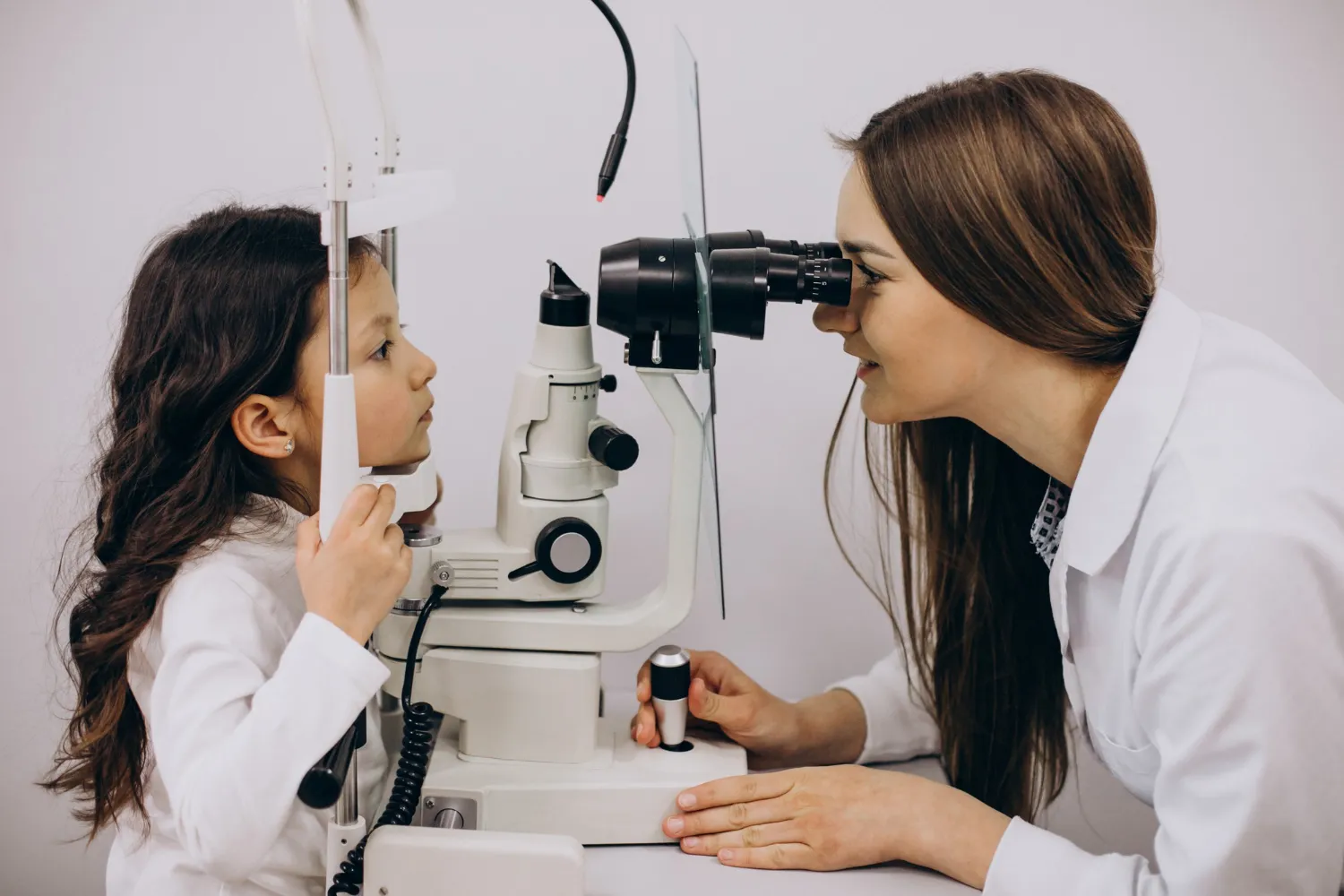
Vision conditions
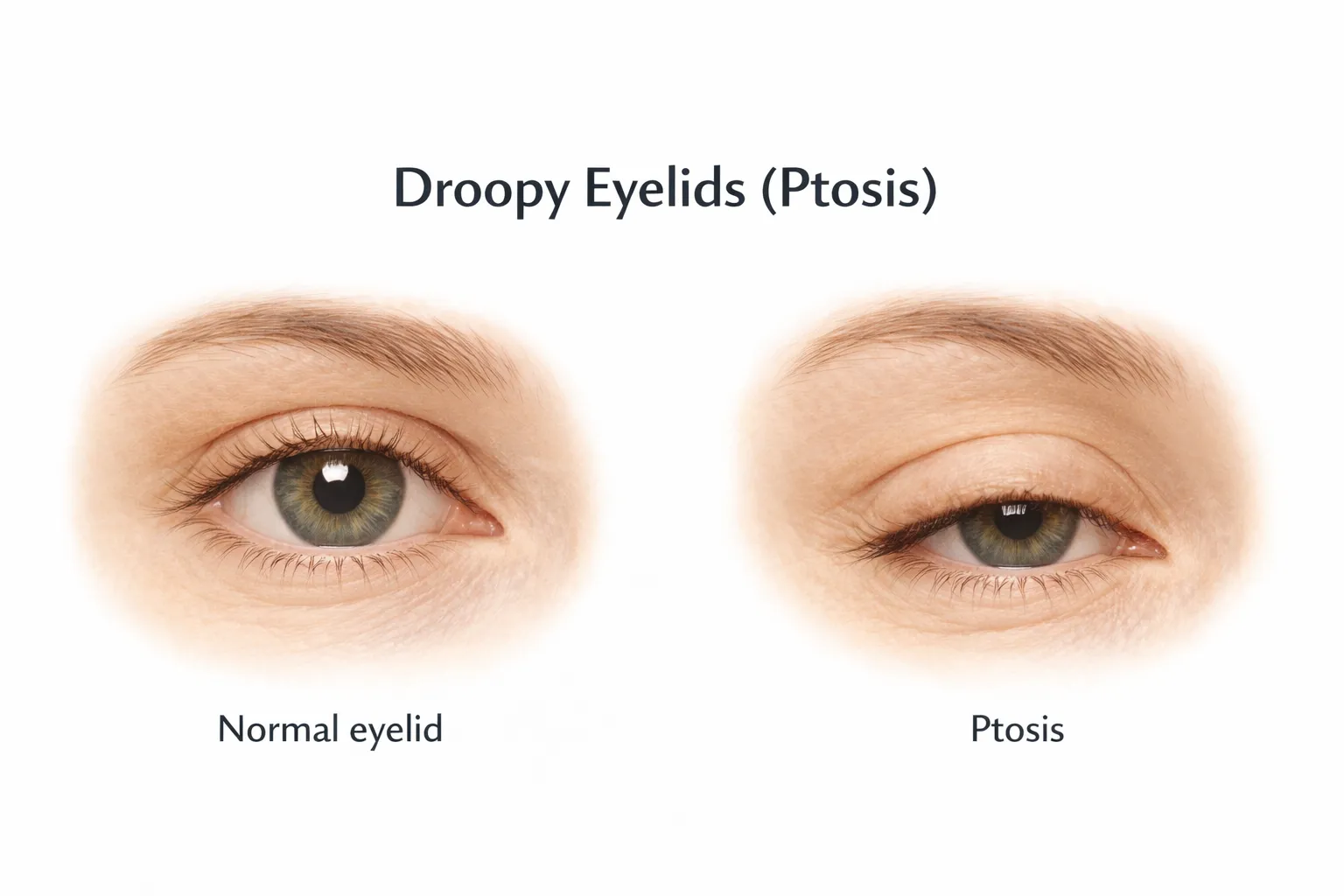
Droopy Eyelids (Ptosis)
Ptosis is when one or both upper eyelids droop, sometimes covering part of the pupil and affecting vision or appearance. It can develop gradually from ageing, muscle weakness, or other causes. An eye evaluation helps determine the type and suitable management options.
- 4-6%
Ptosis common in older adults.
- 4-6% Over 60
Drooping increases after 60.
Why eyelids begin to droop
Understanding eyelid drooping
The levator muscle normally lifts the upper eyelid. Ptosis occurs when this muscle or its connection weakens, allowing the lid to sag. It may affect one or both eyes and can be congenital, age-related, or linked to nerve issues, injury, or eye conditions.
- 4-6% of people over age 60 develop noticeable ptosis
- Congenital ptosis affects 1 in 842 births
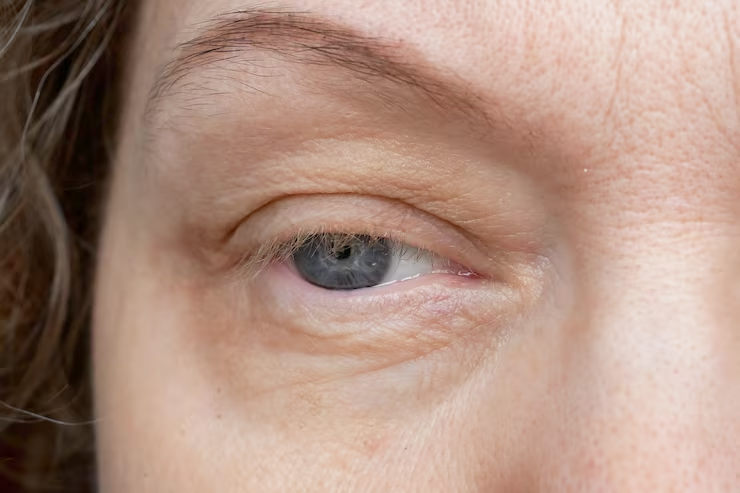
Noticing eyelid position changes
When to consider an eye evaluation
Recognizing the Signs of Droopy Eyelids (Ptosis)
- One or both upper eyelids appearing lower than before
- Needing to raise the eyebrows or tilt the head back to see clearly
- Eye strain, forehead ache or fatigue, especially when reading or using screens
- Difference in lid height between the two eyes that is noticeable in photos
- In children, a preference for using one eye, head tilt, or signs of lazy eye (amblyopia)
Droopy eyelids may cause functional or cosmetic concerns, common features include:
An eye examination is recommended if droopy lids change or occur with double vision, pupil issues, or neurological signs.
Managing Droopy Eyelids (Ptosis)
Ptosis Correction
During your consultation, we evaluate lid height, muscle strength, and facial symmetry to determine if surgery or observation is best, ensuring realistic and balanced results.
Patient voices
4.9 Stars on Google.
Real stories from the thousands of patients who have trusted us with their sight.
“Dr Huang literally saved my eyesight. After 3 doctors misdiagnosed my severe eye infection in Bali and things were getting worse, I booked a flight to Singapore and set an appointment with Dr Huang. Within 5 minutes of sitting down, he already correctly diagnosed my rare condition and began laying out my treatment plan.”

“One of the best decisions I’ve made! Dr Phi answered all my doubts and worries, and made sure that I’m assured on the procedure process and kindly explain to me every step that is he doing during the procedure itself, which is something I’m so appreciative for!”

“I’d like to thank Dr. Huang for being such a wonderful doctor through my process of getting perfect vision. He was so assuring and put me at ease throughout every step of the way, and conducted my procedure with utmost professionalism and expertise. Post-surgery care was also very well conducted; any concerns I had were addressed and allayed. Thank you so much for the great experience amidst what was initially a scary thing for me.”

I recently had TransPRK procedure done by Dr. Philemon and couldn’t have asked for a better experience. From the very first consultation, he took the time to explain every step in detail, making sure I understood what to expect. He’s very thorough and meticulous. You can tell he cares about his patients and takes pride in doing everything perfectly.
What stood out most was how genuine and attentive he is. He checked in with me before and after the procedure, made sure all my questions were answered, and went above and beyond to make sure I felt cared for.
It’s rare to find someone who’s both exceptionally professional and sincerely compassionate. I sincerely recommend Dr. Philemon to anyone considering refractive surgery.

I’m incredibly grateful to Dr Philemon Huang for the outstanding care and results he delivered. I underwent IOL implant surgery with Dr Huang, and it completely transformed my vision—from being unable to see without glasses to achieving 20/20 vision after surgery.
Dr Huang was clear, professional, and thorough in his recommendations, explaining why LASIK wasn’t suitable for me and why the IOL approach was the best option. His expertise and confidence made the entire process feel reassuring, and the results speak for themselves.
Thank you, Dr Philemon Huang, for your exceptional skill and care. I couldn’t be happier with the outcome.

Clarifying Your Concerns
Frequently Asked Questions
We understand that vision correction is a significant decision. Here are honest, transparent answers to the questions we hear most often from our patients.
Ptosis is the drooping of the upper eyelid due to weakness of the lifting muscle, eyelid tissue changes, or nerve issues. It can affect one or both eyes.
Symptoms may include a partially closed eyelid, difficulty keeping eyes open, eye strain, headaches, and sometimes blurred or blocked vision.
Yes. In severe cases, the eyelid may cover the pupil, reducing vision. In children, ptosis can lead to lazy eye (amblyopia) if untreated.
Ptosis can be congenital (present at birth) or acquired due to aging, trauma, neurological conditions, or prior eyelid surgery.
Surgery, such as dacryocystorhinostomy (DCR), is considered if non-surgical treatments are ineffective, or if there is a risk of ongoing infection or severe blockage.
Treatment depends on severity. Options include observation, temporary non-surgical supports, or surgery such as levator tightening or frontalis sling procedures.
Ptosis surgery is a medical procedure to tighten the levator muscle that lifts the eyelid. Blepharoplasty is often a cosmetic procedure to remove excess skin/fat (eye bags). While often performed together, only the Ptosis component is typically MediSave claimable if it meets the MOH medical necessity criteria.
Most Ptosis surgeries use an incisional approach where the scar is hidden within the natural eyelid crease. For mild cases, a “scarless” posterior approach (Muller’s muscle resection) can be done from the underside of the eyelid, leaving no external marks. Both techniques aim for natural symmetry and a refreshed appearance.