
Refractive Surgery Options
Laser Vision Correction
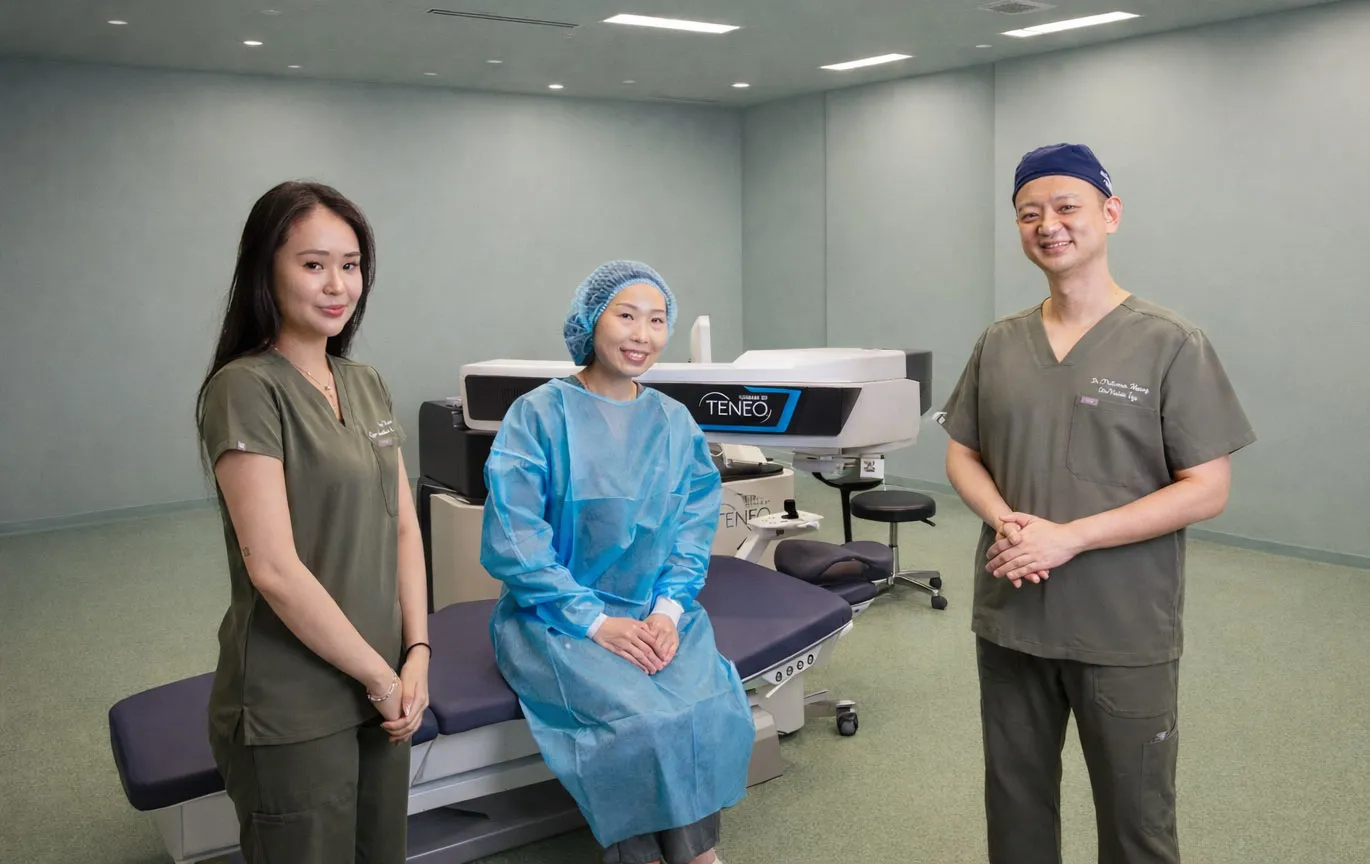
Laser Vision Correction (LVC) is a safe, proven way to reduce or eliminate your dependence on glasses or contact lenses. At One Vision, our clinical assessments and laser-assisted techniques are used to determine suitability for various corrective options.
CANDIDATE CHECKLIST
Who should go for Laser Vision Correction?
- Are short-sighted, long-sighted, or have astigmatism
- Feel limited by glasses or contact lenses
- Have a stable eye prescription
- Want a long-term vision correction option
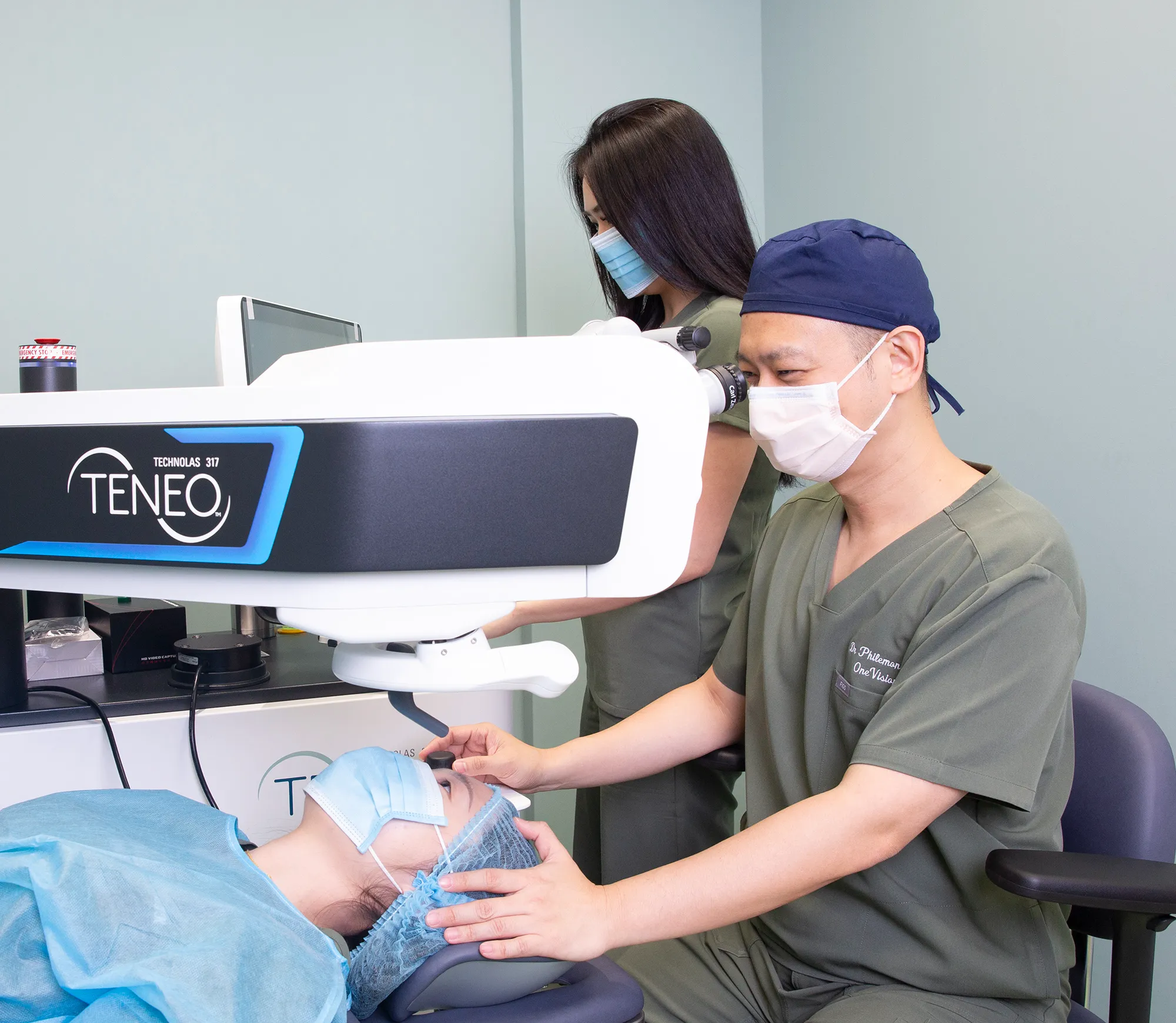
Laser vision correction is suitable for those with stable myopia, hyperopia, or astigmatism, over 18, and in good health. It’s ideal for those wanting to reduce reliance on glasses or contacts. A full eye exam will confirm eligibility.
You may be a good candidate if you:
You may be a good candidate if you:
Treatment options tailored to your needs
Treatment options
We offer a full range of modern laser and lens-based treatments, so you’re never pushed into a one-size-fits-all solution.
Choosing the right option for your vision
Treatment Comparison
Laser vision correction treatments vary in technique and suitability. This comparison helps you understand each option, so you can make an informed decision based on your needs and lifestyle.
| OneLaser™ TransPRK |
OneLaser™ TransPRK Plus# |
Zeiss SMILE PRO 2.0 |
Phakic IOL (ICL) |
|
|---|---|---|---|---|
| Invasiveness | Very minimal | Very minimal | Minimal | Moderate |
| Technique | All laser, no cut | All laser, no cut | Small cut | Intraocular |
| Procedure time (per eye) | 3–5 min | 3–5 min | 5–10 min | 15–20 min |
| Laser tracking during laser | Yes | Yes | No | Not applicable |
| Optimise contrast | Yes with Octavius | Yes with Octavius | Not available | Not applicable |
| Dry eye risk | Minimal | Minimal | Minimal | Very minimal |
| Visual recovery | 4–5 days | 4–5 days | 2–3 days | 1–2 days |
| Suitable for extreme sports | Yes | Yes | Generally yes, with some exclusions | Not advisable |
| Myopia range | −0.50 to −11.0D | −0.50 to −11.0D | −3.0 to −8.0D | −3.0 to −16.0D |
# OneLaser™ TransPRK Plus refers to the Presbyopia programme.
Who is suitable for LVC?
Is Laser Vision Correction right for you?
Laser Vision Correction is not one-size-fits-all. The right treatment depends on your eye health, prescription, and lifestyle. A proper assessment helps determine whether LVC is safe and suitable for you.
Your eye specialist will assess several important factors before recommending treatment.
You may be suitable for Laser Vision Correction if:
- Your eye prescription has been stable
- Your corneas are healthy and suitable for correction
- You are above the recommended age
- You have no active eye disease or infection
- You understand the benefits and limitations of LVC
How to Prepare
Get ready for your assessment
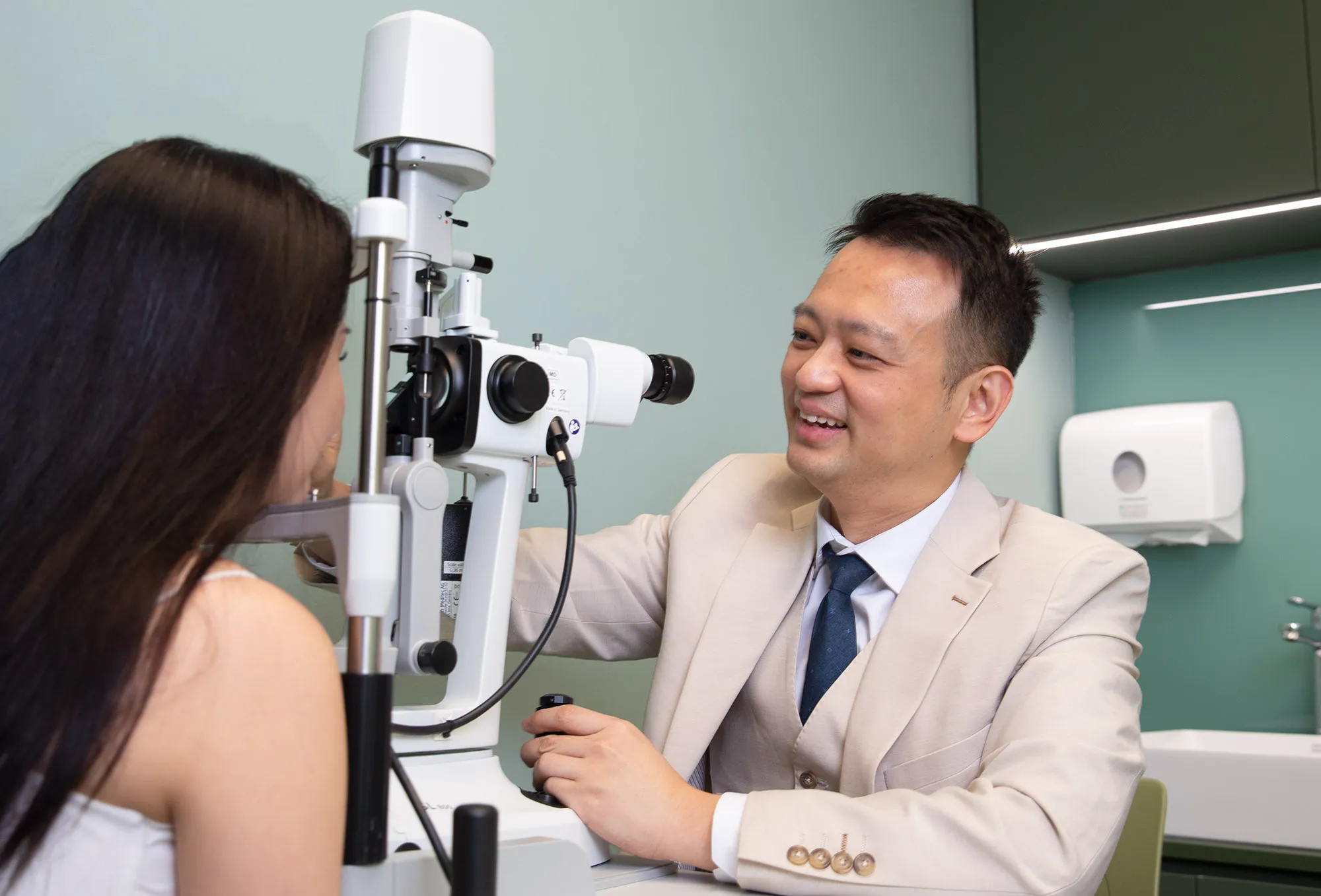
Proper preparation ensures a smooth evaluation. Follow these steps before your visit:
Before Your Assessment
Please arrive makeup-free with your current prescription, allowing ample time for your evaluation and ensuring you've paused contact lens wear as advised.
During the Evaluation
Our team will guide you through each step, explaining the process so you know exactly what to expect.
After the Assessment
You’ll receive a clear treatment plan, with next steps outlined based on your evaluation results.
Patient voices
4.9 Stars on Google.
Real stories from the thousands of patients who have trusted us with their sight.
“Dr Huang literally saved my eyesight. After 3 doctors misdiagnosed my severe eye infection in Bali and things were getting worse, I booked a flight to Singapore and set an appointment with Dr Huang. Within 5 minutes of sitting down, he already correctly diagnosed my rare condition and began laying out my treatment plan.”

“One of the best decisions I’ve made! Dr Phi answered all my doubts and worries, and made sure that I’m assured on the procedure process and kindly explain to me every step that is he doing during the procedure itself, which is something I’m so appreciative for!”

“I’d like to thank Dr. Huang for being such a wonderful doctor through my process of getting perfect vision. He was so assuring and put me at ease throughout every step of the way, and conducted my procedure with utmost professionalism and expertise. Post-surgery care was also very well conducted; any concerns I had were addressed and allayed. Thank you so much for the great experience amidst what was initially a scary thing for me.”

I recently had TransPRK procedure done by Dr. Philemon and couldn’t have asked for a better experience. From the very first consultation, he took the time to explain every step in detail, making sure I understood what to expect. He’s very thorough and meticulous. You can tell he cares about his patients and takes pride in doing everything perfectly.
What stood out most was how genuine and attentive he is. He checked in with me before and after the procedure, made sure all my questions were answered, and went above and beyond to make sure I felt cared for.
It’s rare to find someone who’s both exceptionally professional and sincerely compassionate. I sincerely recommend Dr. Philemon to anyone considering refractive surgery.

I’m incredibly grateful to Dr Philemon Huang for the outstanding care and results he delivered. I underwent IOL implant surgery with Dr Huang, and it completely transformed my vision—from being unable to see without glasses to achieving 20/20 vision after surgery.
Dr Huang was clear, professional, and thorough in his recommendations, explaining why LASIK wasn’t suitable for me and why the IOL approach was the best option. His expertise and confidence made the entire process feel reassuring, and the results speak for themselves.
Thank you, Dr Philemon Huang, for your exceptional skill and care. I couldn’t be happier with the outcome.

Clarifying Your Concerns
Frequently Asked Questions
We understand that eye surgery—especially for seniors—can feel daunting. Here are honest, transparent answers to the questions we hear most often from patients and their families
Laser vision correction is a procedure that uses laser technology to reshape the cornea, improving the focus of light entering the eye. It corrects common refractive errors like myopia (nearsightedness), hyperopia (farsightedness) astigmatism and presbyopia.
We offer different procedures depending on your eye condition, including the OneLaser™ TransPRK Programme, ZEISS SMILE Pro, and Implantable Collamer Lens (ICL). Each procedure works differently and is recommended based on detailed assessment.
Suitability depends on your prescription, corneal thickness, eye health, and lifestyle needs. A comprehensive eye examination and consultation are required before recommending a treatment.
-
Surface laser (OneLaser™ TransPRK) reshapes the cornea without creating a flap.
-
SMILE Pro is a keyhole laser lenticule extraction procedure performed within the cornea.
-
ICL involves implanting a lens inside the eye without removing corneal tissue.
The most appropriate option varies from person to person.
Laser vision correction has been widely performed worldwide. As with all medical procedures, there are potential benefits and risks. Your doctor will explain these in detail before treatment.
No, laser vision correction is generally painless. Your eye will be numbed with local anaesthetic drops before the procedure. You may feel some pressure, but the procedure itself is quick, and discomfort is minimal.
Patients with thinner corneas may be considered for surface laser procedures or ICL, depending on overall eye health. Assessment findings will guide the recommendation.
Recovery from OneLaser™ transPRK, Zeiss SmilePro or ICL can take few days to a week. Full recovery, including stabilisation of vision, may take a few weeks.
Like any surgery, laser vision correction carries some risks, including dry eyes, glare, or halo effects, but these are generally temporary. Serious complications are rare, and your ophthalmologist will provide detailed post-operative care instructions to minimise risks.
Laser vision correction procedures are generally classified as elective procedures and are not claimable under Medisave.
Most patients can return to work and resume normal activities within a few days. However, it’s important to avoid activities that could irritate the eyes, such as swimming or strenuous exercise, for about a week.