

Relieving discomfort and restoring appearance
Eyelid Disorders Treatment
Eyelid disorders like blepharitis, styes and chalazia cause redness, swelling and irritation. Treatment clears infection, reduces inflammation and prevents recurrence.
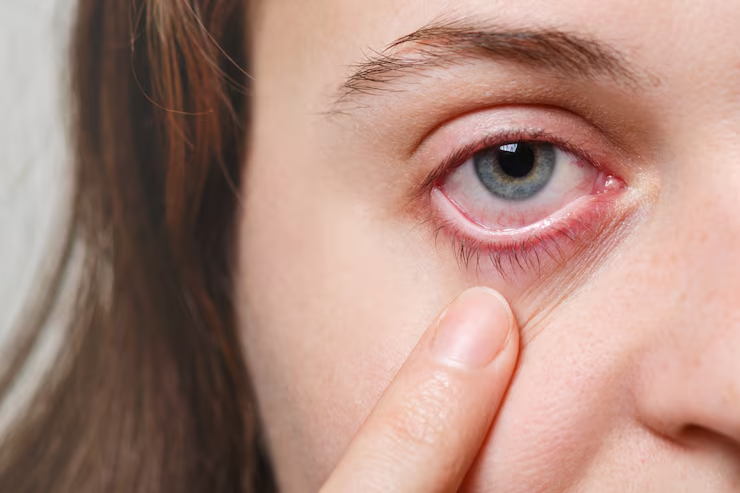
Common signs needing attention
Who should get checked?
- Persistent eyelid redness, scaling or crusting (blepharitis)
- Tender lump on eyelid margin (stye) or deeper swelling (chalazion)
- Eyelid drooping affecting vision or appearance
- Chronic irritation despite lid hygiene attempts
Eyelid problems often improve with care but may signal underlying issues. Early evaluation prevents complications.
Consider evaluation if you notice:
What is involved in Eyelid Disorders Treatment
Targeted approach to eyelid health
Treatment combines lid hygiene, medication and minor procedures when needed. Most cases resolve within weeks.
The process:
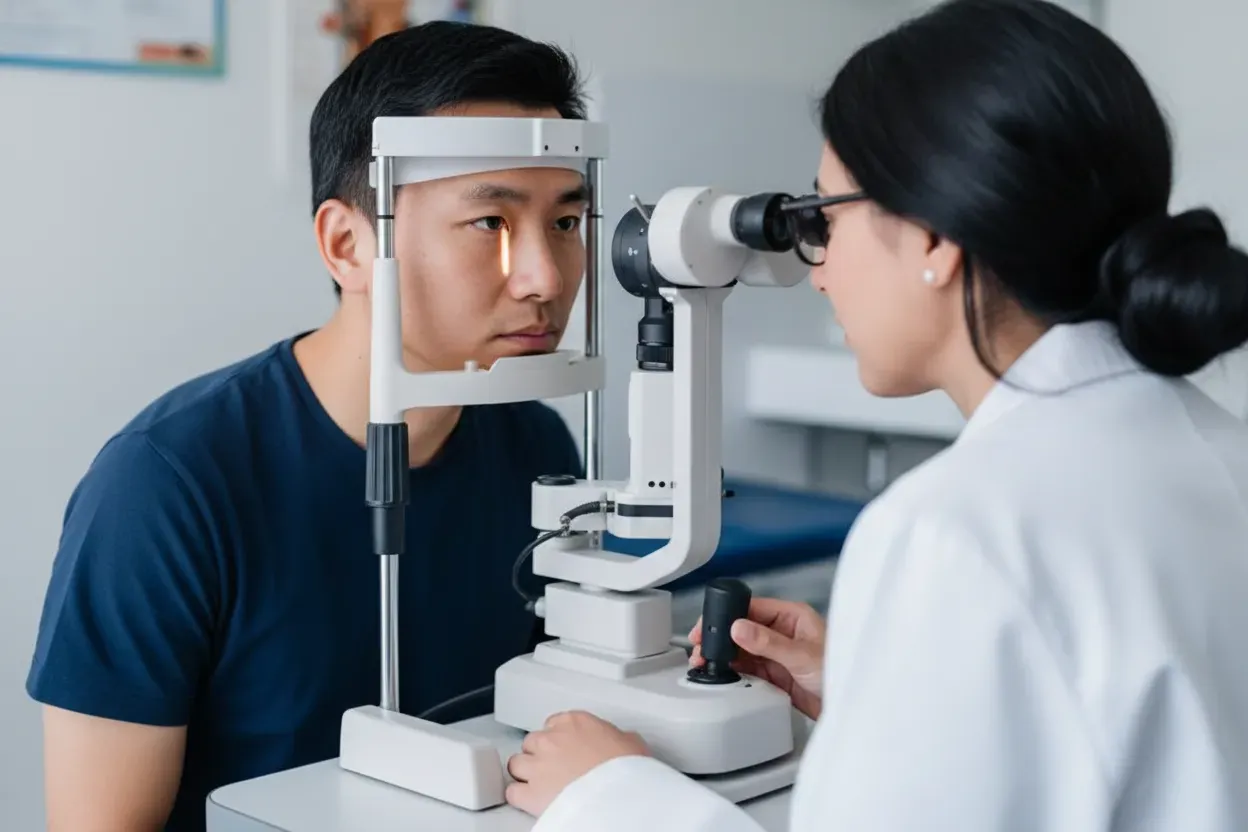
- Slit-lamp examination – Assesses glands, lashes and margins
- Customised plan – Hygiene, drops, warm compresses or drainage
- Follow-up review – Ensures complete resolution
Based on the diagnosis, your eye specialist will recommend medical, procedural, or surgical treatment, tailored to your condition.
Types of Eyelid Disorders Treatment
Tailored care for each eyelid condition
Eyelid disorders vary from mild irritation to chronic issues. Treatments range from daily care routines to in-office procedures, depending on the severity and type of condition.
Smooth recovery timeline
What to expect during recovery
The recovery timeline can vary depending on your treatment. Whether you received medication or in-office procedures, follow the steps below for the best healing experience.
Immediately After Treatment
You may experience mild discomfort, swelling, or redness, especially after in-office procedures like drainage or epilation. Use prescribed medication and follow post-treatment care instructions.
The First Few Days to Weeks
During this period, continue your daily lid hygiene routine with wipes and warm compresses. Swelling should gradually decrease, and discomfort will lessen. Follow-up visits help ensure proper healing.
Full Recovery
Most cases improve within a few weeks. For recurring issues, ongoing lid hygiene may be needed to maintain results and prevent flare-ups.
Patient voices
4.9 Stars on Google.
Real stories from the thousands of patients who have trusted us with their sight.
“Dr Huang literally saved my eyesight. After 3 doctors misdiagnosed my severe eye infection in Bali and things were getting worse, I booked a flight to Singapore and set an appointment with Dr Huang. Within 5 minutes of sitting down, he already correctly diagnosed my rare condition and began laying out my treatment plan.”

“One of the best decisions I’ve made! Dr Phi answered all my doubts and worries, and made sure that I’m assured on the procedure process and kindly explain to me every step that is he doing during the procedure itself, which is something I’m so appreciative for!”

“I’d like to thank Dr. Huang for being such a wonderful doctor through my process of getting perfect vision. He was so assuring and put me at ease throughout every step of the way, and conducted my procedure with utmost professionalism and expertise. Post-surgery care was also very well conducted; any concerns I had were addressed and allayed. Thank you so much for the great experience amidst what was initially a scary thing for me.”

I recently had TransPRK procedure done by Dr. Philemon and couldn’t have asked for a better experience. From the very first consultation, he took the time to explain every step in detail, making sure I understood what to expect. He’s very thorough and meticulous. You can tell he cares about his patients and takes pride in doing everything perfectly.
What stood out most was how genuine and attentive he is. He checked in with me before and after the procedure, made sure all my questions were answered, and went above and beyond to make sure I felt cared for.
It’s rare to find someone who’s both exceptionally professional and sincerely compassionate. I sincerely recommend Dr. Philemon to anyone considering refractive surgery.

I’m incredibly grateful to Dr Philemon Huang for the outstanding care and results he delivered. I underwent IOL implant surgery with Dr Huang, and it completely transformed my vision—from being unable to see without glasses to achieving 20/20 vision after surgery.
Dr Huang was clear, professional, and thorough in his recommendations, explaining why LASIK wasn’t suitable for me and why the IOL approach was the best option. His expertise and confidence made the entire process feel reassuring, and the results speak for themselves.
Thank you, Dr Philemon Huang, for your exceptional skill and care. I couldn’t be happier with the outcome.

Clarifying Your Concerns
frequently asked questions
We understand that eye surgery—especially for seniors—can feel daunting. Here are honest, transparent answers to the questions we hear most often from patients and their families
Common eyelid disorders include ptosis (drooping eyelid), entropion (inward-turning eyelid), ectropion (outward-turning eyelid), chalazia (blocked glands), styes (infected glands), and blepharitis (inflammation of the eyelid).
Your ophthalmologist will perform a thorough eye examination, which may include assessing eyelid function, checking for inflammation or infection, and sometimes imaging to evaluate the underlying causes.
Two established clinical methods are used: the Anterior approach (incisional), where the levator muscle is tightened through a skin crease incision, and the Posterior approach (Muller’s muscle resection), performed from under the eyelid. The choice of technique depends on the severity of the droop and the patient’s response to phenylephrine testing.
Treatment for entropion may involve lubrication for mild cases or surgery to reposition the eyelid. Botulinum toxin injections are also used to temporarily relax overactive muscles.
Ectropion may be treated with lubricating eye drops, lid hygiene, and surgical procedures like lateral tarsal strip to tighten the eyelid if the condition causes discomfort or vision problems.
Chalazia and styes are often treated with warm compresses to encourage drainage. In some cases, antibiotics, drainage, or minor surgery may be necessary if they become persistent or infected.
Blepharitis treatment typically includes regular eyelid hygiene, warm compresses, and sometimes antibiotic or steroid eye drops to control inflammation and infection.