

SURGICAL SOLUTIONS
Cataract Surgery. Restore Your Youthful Clarity.
A safe, 20-minute day procedure to replace your cloudy natural lens with an advanced artificial intraocular lens. Regain high-definition vision and, in many cases, read without glasses.

- 30%
Adults over 45
- 80%
Adults over 60
- 25,000+
Surgeries Performed
CANDIDATE CHECKLIST
Is Cataract Surgery Right for You?
- Vision feels "cloudy," "foggy," or like looking through a dirty window.
- Colors look faded or yellowish.
- Glare from headlights makes night driving dangerous.
- Frequent changes in spectacle prescriptions no longer help.
- You are over 50 and want to treat Presbyopia (Lao Hua) simultaneously.
Cataracts are a natural part of aging, but you don't have to live with the blur. You should consider surgery if:
A 20-Minute Transformation
THE PROCEDURE
Cataract surgery is one of the safest and most successful procedures in modern medicine.
-
The Removal: We use high-frequency ultrasound (Phacoemulsification) to gently break up and remove the cloudy natural lens through a microscopic incision.
-
The Implant: A customized Intraocular Lens (IOL) is inserted. This permanent lens restores clarity and can correct Short-sightedness, Presbyopia and Astigmatism at the same time.
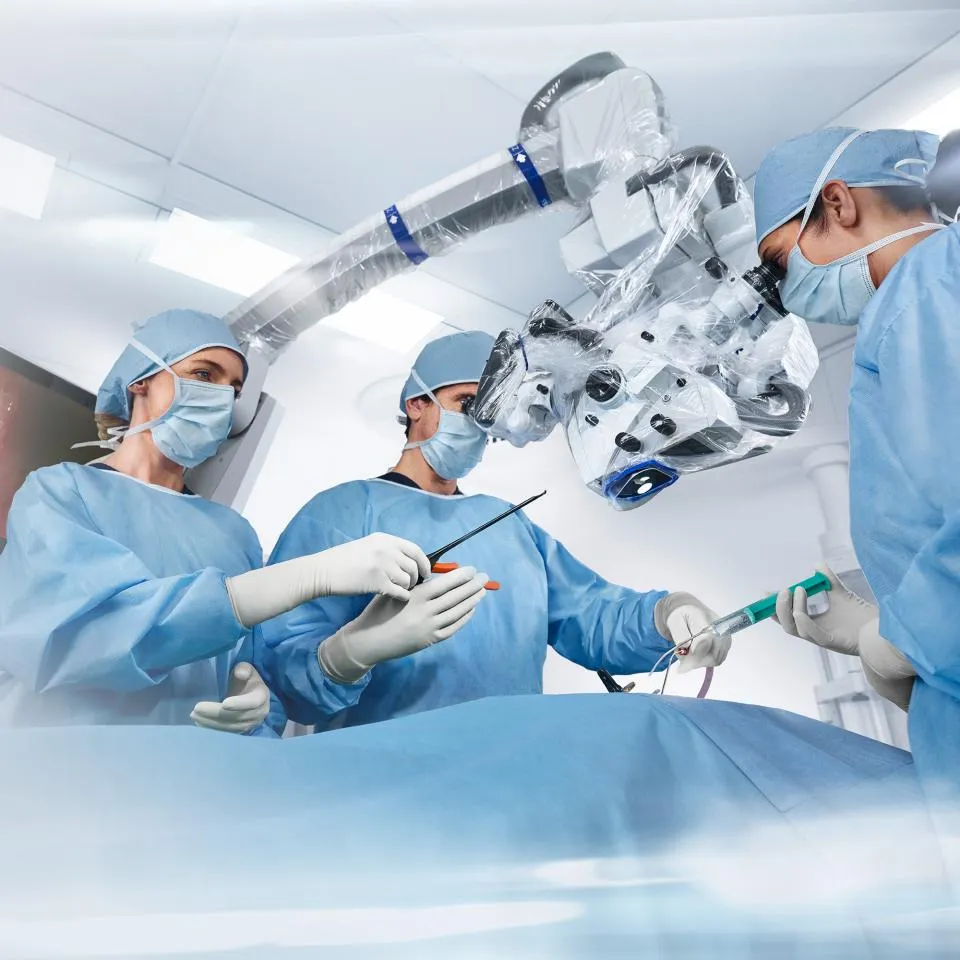
Modern surgical techniques tailored to your visual needs.
Treatment Options
When cataracts begin to affect reading, driving, or daily activities, surgery may be recommended.
Choose Your Lens
Intraocular Lens Options
Discover how different IOLs address distance vision, near tasks, and astigmatism—your specialist will recommend the best fit after a full eye assessment.
| Lens Type | Standard Monofocal IOL (Non-Toric) |
Monofocal Toric IOL |
Multifocal Toric IOL |
EDOF Toric IOL |
|---|---|---|---|---|
| What It Does | Replaces the cloudy lens and focuses vision at one main distance, usually for clear distance vision. | Similar to monofocal but designed to reduce the effect of corneal astigmatism for clearer single-distance vision. | Uses multiple optical zones to provide distance, intermediate and near focus, while also addressing astigmatism. | Creates an extended focal range for a more continuous span of focus, mainly distance to intermediate, with astigmatism correction. |
| Astigmatism Correction | No — does not correct pre-existing corneal astigmatism. | Yes — built-in toric power to help neutralise corneal astigmatism. | Yes — toric component to correct corneal astigmatism. | Yes — toric versions can reduce corneal astigmatism. |
| Range of Vision | Clear at one distance (often distance); near and intermediate tasks are usually blurrier. | Clear at a single chosen distance (usually distance) when properly aligned; near vision remains limited. | Designed to give functional vision at several distances — distance, intermediate and near. | Very good distance and intermediate vision (e.g. driving, computer); near vision improved but may not match multifocal lenses. |
| Typical Need for Glasses | Most patients still need glasses for reading and often for computer work. | Reduced dependence on distance glasses, but reading glasses still usually needed. | Many patients can perform most daily activities without glasses, though some fine tasks may still require them. | Less dependent on glasses for distance and intermediate tasks; reading glasses may still be needed for prolonged near work. |
| Points to Consider | Highest image quality and lowest risk of halos or glare, but offers the least range of spectacle-independent vision. | Visual quality similar to monofocal lenses; accurate positioning and alignment of the toric axis are important. | Higher chance of halos, glare or reduced contrast, especially in low light. Requires careful patient selection. | Fewer halos and better contrast than multifocal IOLs, but night-time symptoms can still occur and near vision may need support. |
EDOF = Extended Depth of Focus. Toric lenses are specifically designed for eyes with corneal astigmatism.
Information on this page is provided for general education and does not replace a personalised medical consultation. Suitability for any intraocular lens depends on individual eye health, measurements and visual needs, and will be assessed by our ophthalmologist during a comprehensive cataract evaluation.
Your Recovery
Back to Life in 24 Hours
Cataract surgery is a day procedure designed for minimal disruption to your lifestyle. Most of our patients go home immediately after surgery and notice brighter, clearer vision as early as the next morning.
The Procedure
20 minutes per eye. Numbing drops only. No injections. No pain. Sedation if required.
The Next Day
Vision improves significantly. Most patients can watch TV and walk around comfortably.
Full Recovery
Eye heals near completely over 4-6 weeks. Colors appear brighter and sharper.
Patient voices
4.9 Stars on Google.
Real stories from the thousands of patients who have trusted us with their sight.
“Dr Huang literally saved my eyesight. After 3 doctors misdiagnosed my severe eye infection in Bali and things were getting worse, I booked a flight to Singapore and set an appointment with Dr Huang. Within 5 minutes of sitting down, he already correctly diagnosed my rare condition and began laying out my treatment plan.”

“One of the best decisions I’ve made! Dr Phi answered all my doubts and worries, and made sure that I’m assured on the procedure process and kindly explain to me every step that is he doing during the procedure itself, which is something I’m so appreciative for!”

“I’d like to thank Dr. Huang for being such a wonderful doctor through my process of getting perfect vision. He was so assuring and put me at ease throughout every step of the way, and conducted my procedure with utmost professionalism and expertise. Post-surgery care was also very well conducted; any concerns I had were addressed and allayed. Thank you so much for the great experience amidst what was initially a scary thing for me.”

I recently had TransPRK procedure done by Dr. Philemon and couldn’t have asked for a better experience. From the very first consultation, he took the time to explain every step in detail, making sure I understood what to expect. He’s very thorough and meticulous. You can tell he cares about his patients and takes pride in doing everything perfectly.
What stood out most was how genuine and attentive he is. He checked in with me before and after the procedure, made sure all my questions were answered, and went above and beyond to make sure I felt cared for.
It’s rare to find someone who’s both exceptionally professional and sincerely compassionate. I sincerely recommend Dr. Philemon to anyone considering refractive surgery.

I’m incredibly grateful to Dr Philemon Huang for the outstanding care and results he delivered. I underwent IOL implant surgery with Dr Huang, and it completely transformed my vision—from being unable to see without glasses to achieving 20/20 vision after surgery.
Dr Huang was clear, professional, and thorough in his recommendations, explaining why LASIK wasn’t suitable for me and why the IOL approach was the best option. His expertise and confidence made the entire process feel reassuring, and the results speak for themselves.
Thank you, Dr Philemon Huang, for your exceptional skill and care. I couldn’t be happier with the outcome.

Clarifying Your Concerns
Frequently Asked Questions
We understand that eye surgery—especially for seniors—can feel daunting. Here are honest, transparent answers to the questions we hear most often from patients and their families
In Singapore, private cataract surgery typically ranges from $5,000 to $10,000 per eye. Total costs depend on the type of intraocular lens (IOL) chosen, surgical technique, and clinical facility fees. We provide transparent pricing and financial counseling during your initial screening.
Yes. Medisave can typically be used to help cover part of the cost of cataract surgery in Singapore, subject to the prevailing Ministry of Health (MOH) guidelines and withdrawal limits. The exact claimable amount may vary depending on the type of procedure performed and your individual Medisave balance. Our team will guide you through the eligibility and claim process during your consultation.
Most patients experience clearer vision within 24 to 48 hours. While you can return to light activities in 2–3 days, full stabilization of the eye usually takes about 4 to 6 weeks. Avoid strenuous exercise and swimming for at least 1-2 weeks post-surgery.
Cataract surgery is a painless day procedure. We use local anesthetic eye drops to numb the eye and may offer light sedation to ensure you are relaxed. Most patients only feel a slight sensation of pressure, and the procedure is usually completed within 15 to 20 minutes.
This depends on the type of intraocular lens (IOL) you choose. Standard monofocal lenses provide clear distance vision but may require reading glasses. Advanced multifocal or trifocal lenses can correct vision at multiple distances, potentially making you entirely spectacle-free.
Bladeless cataract surgery uses a femtosecond laser instead of manual handheld blades to perform certain steps of the procedure. This computer-guided technology allows for ultra-precise corneal incisions and laser-softening of the cataract, often leading to a gentler procedure and more predictable visual outcomes.