

Relieving discomfort and restoring appearance
Tearing Disorder (Nasolacrimal Duct Obstruction) Treatment
Tearing disorders occur when the tear duct (nasolacrimal duct) is narrow or blocked, so tears cannot drain properly and overflow onto the cheeks. Treatment aims to clear the blockage, relieve watering, and prevent infections in both children and adults.

Common signs needing attention
Who should get checked for Tearing Disorder?
- Constant watery eye on one or both sides, indoors and outdoors.
- Mucus or discharge at the inner corner of the eye, with or without redness.
- Recurrent “conjunctivitis” in the same eye, especially in infants.
- Swelling or tenderness over the inner corner of the eyelids (possible infection of the tear sac).
An eye examination is recommended if tearing is frequent or persistent, especially when it affects daily activities.
You may benefit from assessment if you notice:
You may benefit from assessment if you notice:
What is involved in Tearing Disorder Treatment?
From simple massage to day‑surgery procedures
The treatment plan depends on age, severity of symptoms, and whether the obstruction is partial or complete.
Typical care pathway:
-
Detailed examination
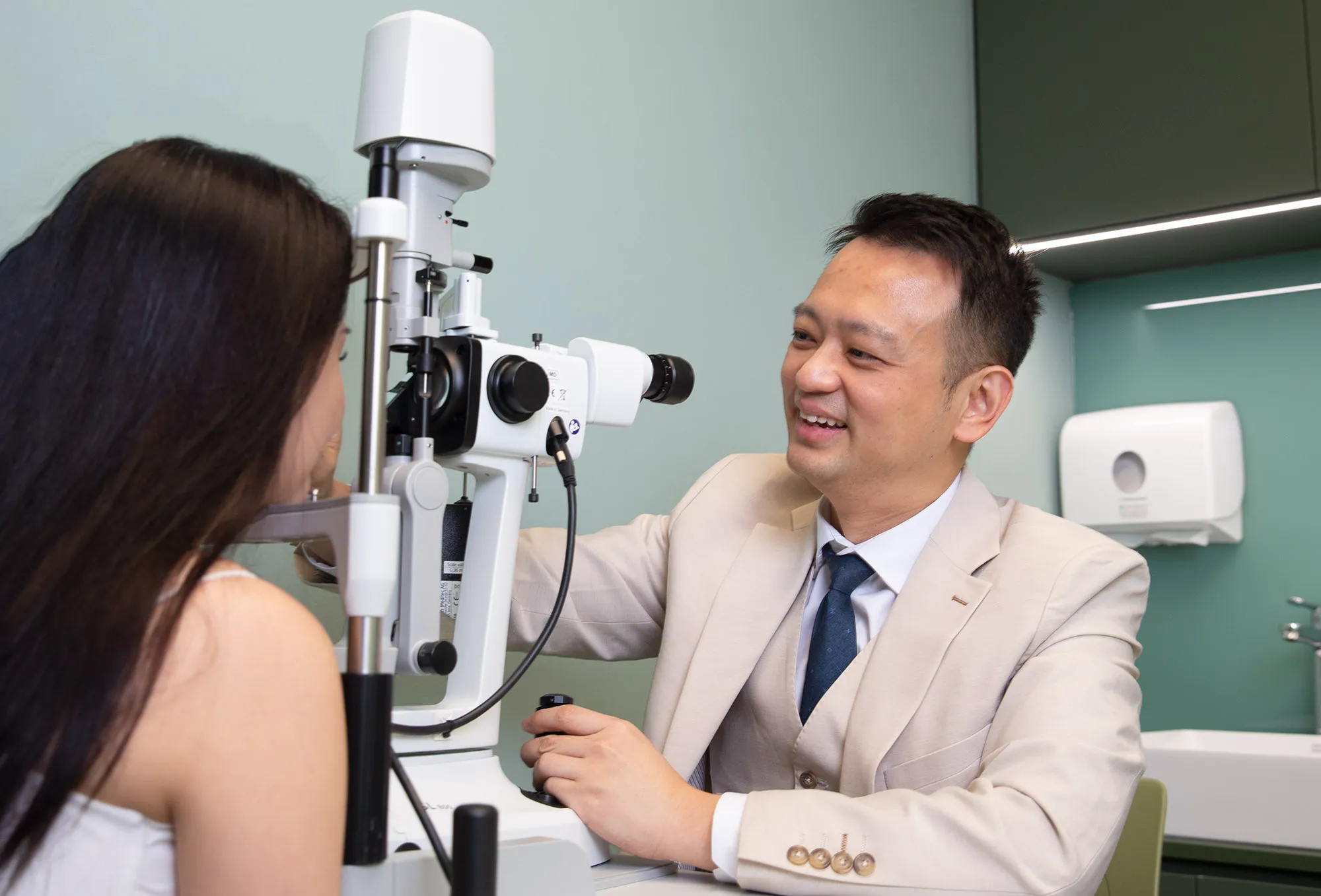
The specialist checks the eyelids, puncta and tear drainage system, and may gently flush the duct to see if it is open or blocked.
-
Initial conservative care
For many infants and some adults, simple measures such as lacrimal sac massage, lid cleaning and short courses of antibiotic drops (when discharge is present) are used first.
-
Planning a procedure if needed
If tearing persists or infections recur, minimally invasive procedures or tear‑duct surgery are discussed.
Types of Tearing Disorder Treatment
Different options for babies, adults and recurrent cases
Treatment depends on the severity of your condition. Options range from lifestyle adjustments and medication to advanced therapies and surgery. Your treatment plan will be personalized to suit your needs and goals.
Smooth recovery timeline
What to expect during recovery
Recovery varies depending on the treatment performed. Some treatments offer quick relief, while others may take a bit longer for complete healing.
Immediately After Treatment
You may experience mild swelling, discomfort, or drainage, especially after probing or stenting. Follow your post-care instructions and avoid rubbing the eyes.
The First Few Days to Weeks
If you had a more invasive treatment like DCR, mild bruising or swelling may persist for a few days. Continue any prescribed medications and avoid activities that may strain the eyes.
Full Recovery
Most procedures offer full recovery within a few weeks, though stenting may take longer. Follow-up appointments are important to monitor healing and ensure the duct remains open.
Patient voices
4.9 Stars on Google.
Real stories from the thousands of patients who have trusted us with their sight.
“Dr Huang literally saved my eyesight. After 3 doctors misdiagnosed my severe eye infection in Bali and things were getting worse, I booked a flight to Singapore and set an appointment with Dr Huang. Within 5 minutes of sitting down, he already correctly diagnosed my rare condition and began laying out my treatment plan.”

“One of the best decisions I’ve made! Dr Phi answered all my doubts and worries, and made sure that I’m assured on the procedure process and kindly explain to me every step that is he doing during the procedure itself, which is something I’m so appreciative for!”

“I’d like to thank Dr. Huang for being such a wonderful doctor through my process of getting perfect vision. He was so assuring and put me at ease throughout every step of the way, and conducted my procedure with utmost professionalism and expertise. Post-surgery care was also very well conducted; any concerns I had were addressed and allayed. Thank you so much for the great experience amidst what was initially a scary thing for me.”

I recently had TransPRK procedure done by Dr. Philemon and couldn’t have asked for a better experience. From the very first consultation, he took the time to explain every step in detail, making sure I understood what to expect. He’s very thorough and meticulous. You can tell he cares about his patients and takes pride in doing everything perfectly.
What stood out most was how genuine and attentive he is. He checked in with me before and after the procedure, made sure all my questions were answered, and went above and beyond to make sure I felt cared for.
It’s rare to find someone who’s both exceptionally professional and sincerely compassionate. I sincerely recommend Dr. Philemon to anyone considering refractive surgery.

I’m incredibly grateful to Dr Philemon Huang for the outstanding care and results he delivered. I underwent IOL implant surgery with Dr Huang, and it completely transformed my vision—from being unable to see without glasses to achieving 20/20 vision after surgery.
Dr Huang was clear, professional, and thorough in his recommendations, explaining why LASIK wasn’t suitable for me and why the IOL approach was the best option. His expertise and confidence made the entire process feel reassuring, and the results speak for themselves.
Thank you, Dr Philemon Huang, for your exceptional skill and care. I couldn’t be happier with the outcome.

Clarifying Your Concerns
frequently asked questions
We understand that eye surgery—especially for seniors—can feel daunting. Here are honest, transparent answers to the questions we hear most often from patients and their families
A nasolacrimal duct obstruction (NLDO) occurs when the tear duct becomes blocked, preventing tears from draining properly, leading to excessive tearing or watery eyes.
NLDO can be caused by a variety of factors, including congenital issues in infants, infections, inflammation, trauma, or age-related changes that weaken the duct.
In infants, a blocked tear duct can lead to excessive tearing and eye discharge. In adults, it can cause watery eyes, frequent eye infections, or discomfort. If symptoms persist, a medical evaluation is recommended.
In infants, most cases resolve on their own with gentle massage over the tear duct. If the obstruction persists, your ophthalmologist may recommend probing or, rarely, surgery.
In adults, treatment may involve lacrimal duct probing to remove the blockage, or in more severe cases, dacryocystorhinostomy (DCR) surgery to create a new drainage pathway for the tears.
Probing is typically performed under local anaesthesia, so patients experience minimal discomfort. The procedure is quick and generally has a high success rate in relieving symptoms.
DCR surgery is recommended when other treatments fail or if the blockage causes significant symptoms. The surgery involves creating a new passage for tear drainage and is usually performed under general anaesthesia.
Yes. DCR is an MOH-approved procedure under Table 5C (Code SL804L). In 2026, Singaporeans and PRs can claim up to $2,770 from MediSave for the surgical fee, in addition to daily hospital charge limits for day surgery (up to $830). Most Integrated Shield Plans also provide coverage for medically indicated cases.
External DCR involves a small skin incision near the bridge of the nose to create a new drainage path. Endoscopic DCR is a minimally invasive approach performed through the nostril using a nasal endoscope, which avoids a skin incision. Both are established surgical techniques with high anatomical success rates (90–95%).