
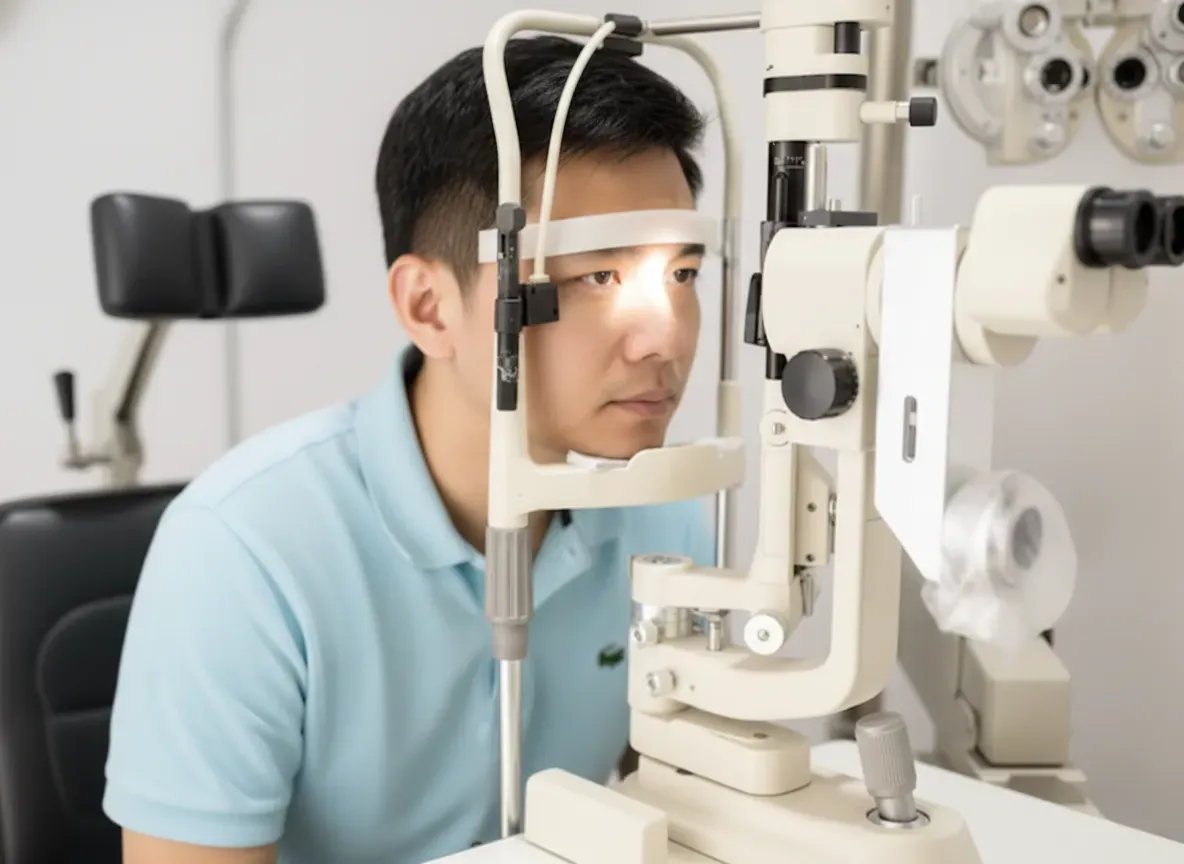
Vision conditions
Dry and Itchy Eyes
Dry or itchy eyes are common and can cause discomfort, tiredness, or blurred vision after reading or screen use. These symptoms may result from tear film imbalance, environmental factors, or eyelid conditions. An eye evaluation helps identify the cause and suitable treatment for lasting comfort.

- 50%
of computer users report dry, tired eyes.
- 40+
Adults over 40 feel dryness more frequently.
- Air‑Con
Dry, cool air can aggravate eye irritation.
Why eyes feel dry or irritated
Understanding tear film imbalance
The eye’s surface is kept healthy by a stable tear film that lubricates and protects it. Reduced tear quality or quantity, allergies, or gland dysfunction may cause dryness, burning, or itching. Identifying and addressing the underlying cause prevents chronic irritation and maintains long‑term eye health.
Adults in Singapore — About 1 in 3
Roughly one‑third of adults in Singapore experience some degree of dry eye symptoms, often linked to prolonged screen time or humid weather.
Women over 50 — Higher prevalence
Hormonal changes make dry eye more common in women over 50, especially those using contact lenses or certain medications.

Key Indicators of Tear Film Dysfunction
When to consider an eye evaluation
Recognizing the Symptoms of Dry and Itchy Eyes
- Burning, stinging, or gritty sensation
- Eyes that water easily after dryness
- Itching or redness, especially around the lids
- Blurred vision during reading or screen work
Dry or itchy eyes may feel irritating but often respond well to targeted care. Common symptoms include:
If you’re experiencing these symptoms, we recommend scheduling an eye examination.
Ways to manage Dry and Itchy Eyes
Relief tailored to your eyes
Treatment depends on the cause and severity of your symptoms. After a detailed eye examination, your ophthalmologist may suggest:
Patient voices
4.9 Stars on Google.
Real stories from the thousands of patients who have trusted us with their sight.
“Dr Huang literally saved my eyesight. After 3 doctors misdiagnosed my severe eye infection in Bali and things were getting worse, I booked a flight to Singapore and set an appointment with Dr Huang. Within 5 minutes of sitting down, he already correctly diagnosed my rare condition and began laying out my treatment plan.”

“One of the best decisions I’ve made! Dr Phi answered all my doubts and worries, and made sure that I’m assured on the procedure process and kindly explain to me every step that is he doing during the procedure itself, which is something I’m so appreciative for!”

“I’d like to thank Dr. Huang for being such a wonderful doctor through my process of getting perfect vision. He was so assuring and put me at ease throughout every step of the way, and conducted my procedure with utmost professionalism and expertise. Post-surgery care was also very well conducted; any concerns I had were addressed and allayed. Thank you so much for the great experience amidst what was initially a scary thing for me.”

I recently had TransPRK procedure done by Dr. Philemon and couldn’t have asked for a better experience. From the very first consultation, he took the time to explain every step in detail, making sure I understood what to expect. He’s very thorough and meticulous. You can tell he cares about his patients and takes pride in doing everything perfectly.
What stood out most was how genuine and attentive he is. He checked in with me before and after the procedure, made sure all my questions were answered, and went above and beyond to make sure I felt cared for.
It’s rare to find someone who’s both exceptionally professional and sincerely compassionate. I sincerely recommend Dr. Philemon to anyone considering refractive surgery.

I’m incredibly grateful to Dr Philemon Huang for the outstanding care and results he delivered. I underwent IOL implant surgery with Dr Huang, and it completely transformed my vision—from being unable to see without glasses to achieving 20/20 vision after surgery.
Dr Huang was clear, professional, and thorough in his recommendations, explaining why LASIK wasn’t suitable for me and why the IOL approach was the best option. His expertise and confidence made the entire process feel reassuring, and the results speak for themselves.
Thank you, Dr Philemon Huang, for your exceptional skill and care. I couldn’t be happier with the outcome.

Clarifying Your Concerns
Frequently Asked Questions
We understand that vision correction is a significant decision. Here are honest, transparent answers to the questions we hear most often from our patients.
Common causes include reduced tear production, poor tear quality, blocked oil glands, screen use, air-conditioning, allergies, and certain medications.
Most cases are mild, but ongoing dryness can affect comfort, vision clarity, and eye surface health if not properly managed.
Screen use reduces blinking, which increases tear evaporation and can worsen dryness and irritation.
Yes. Tear production and oil gland function can decline with age, making dry eye more common over time.
Yes. Eye allergies can trigger itchiness, redness, and watery or dry sensations. Treatment depends on whether allergy, dryness, or both are present.
Your ophthalmologist may assess tear quality, tear quantity, eyelid glands, and eye surface health using specialised tests and imaging.
Dry eye is often a long-term condition, but symptoms can usually be well controlled with the right treatment plan and lifestyle adjustments.
Singapore’s combination of high air-conditioning usage and digital screen time often leads to Evaporative Dry Eye. AC acts as a “moisture vampire,” while screens reduce your blink rate. If your eyes are also itchy, it may be Allergic Conjunctivitis triggered by indoor dust mites or mold.
Treatment Therapy is targeted at the causes. Therapies include Blephex Lid Margin therapy, IPL Therapy combined with LipiFlow. These treatments cleans up the lid margin surfaces, unblock the Meibomian glands (oil glands) to restore a healthy tear film. Combined with appropriate eye drops and lid cleansing foam to deliver the best restoration.