


Symptoms That Warrant Immediate Emergency Care
Most eye irritations — a bit of dryness, mild redness after a long day of screen time, or a stray eyelash scratch — resolve on their own or with basic care. But some eye symptoms are warning signs of conditions that can threaten your vision permanently, sometimes within hours. Knowing when to seek specialist care can make a significant difference. In certain conditions, early diagnosis and treatment may help preserve vision and prevent irreversible vision loss.
This article outlines the eye symptoms that should send you to an emergency room or urgent ophthalmology clinic right away, not to a routine appointment next week.
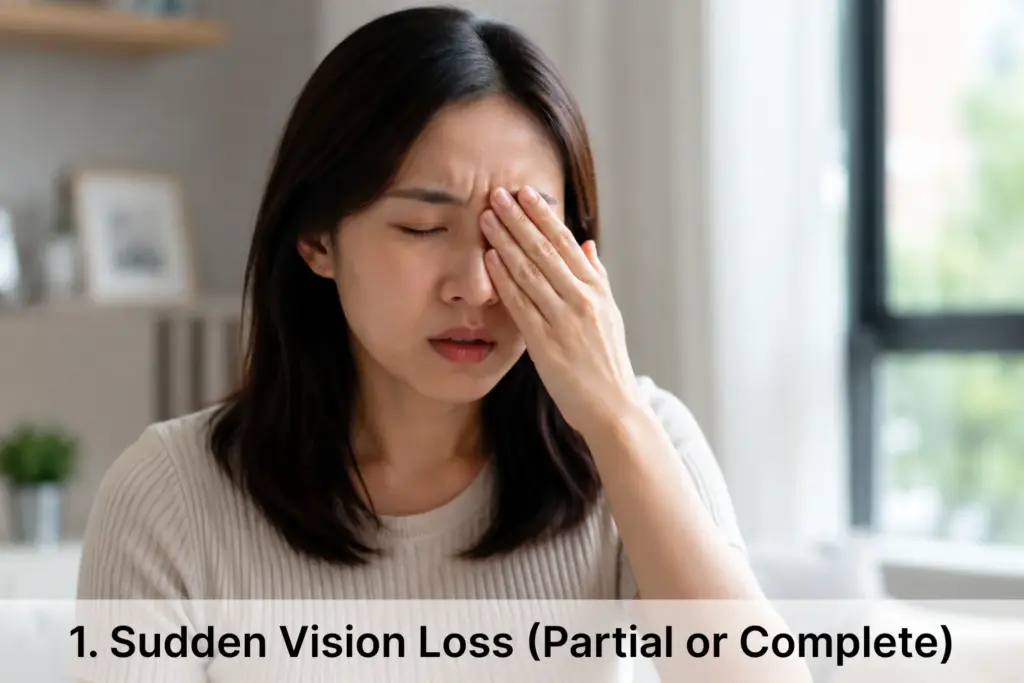
1. Sudden Vision Loss (Partial or Complete)
A sudden reduction or complete loss of vision in one or both eyes is always considered an emergency.
Possible causes include:
- Retinal detachment
- Retinal artery or vein occlusion
- Acute glaucoma
- Stroke affecting vision
- Vitreous haemorrhage
If vision loss lasts more than a few minutes or affects one eye more than the other, treat it as a medical emergency and seek care immediately.

2. New Flashes of Light or a Sudden Shower of Floaters
A few floaters over time are common and usually harmless
However, seek urgent assessment if you notice:
- A sudden increase in floaters
- Bright flashes of light (like camera flashes at the edge of your vision)
- A dark curtain or shadow across your vision
- Peripheral vision disappearing
These symptoms can indicate the retina is tearing. Not every case is an emergency, but it needs prompt evaluation by an eye specialist, ideally within 24 hours, to rule out a tear before it progresses to detachment.

3. Severe Eye Pain
Pain is not a normal symptom of most eye conditions. Urgent assessment is recommended if severe eye pain occurs together with:
- Blurred vision
- Redness
- Headache
- Nausea or vomiting
- Halos around lights
This combination may suggest acute angle-closure glaucoma, is a true ophthalmic emergency requiring immediate pressure-lowering treatment.
Cornea infection/inflammation (termed keratitis) can cause significant pain and progression of the infection/inflammation can result in sight-threatening outcomes. Prompt treatment addresses the condition, limiting damage.

4. Sudden Double Vision
New double vision, particularly if it appears suddenly and doesn’t resolve when you close one eye, can indicate a problem with the nerves or muscles controlling eye movement, or in some cases a neurological event such as a stroke or aneurysm.
This symptom always warrants urgent evaluation, especially if it comes with other symptoms like :
- Facial drooping
- Slurred speech
- Severe Headache
In such a situation, call emergency services immediately to seek assessment.
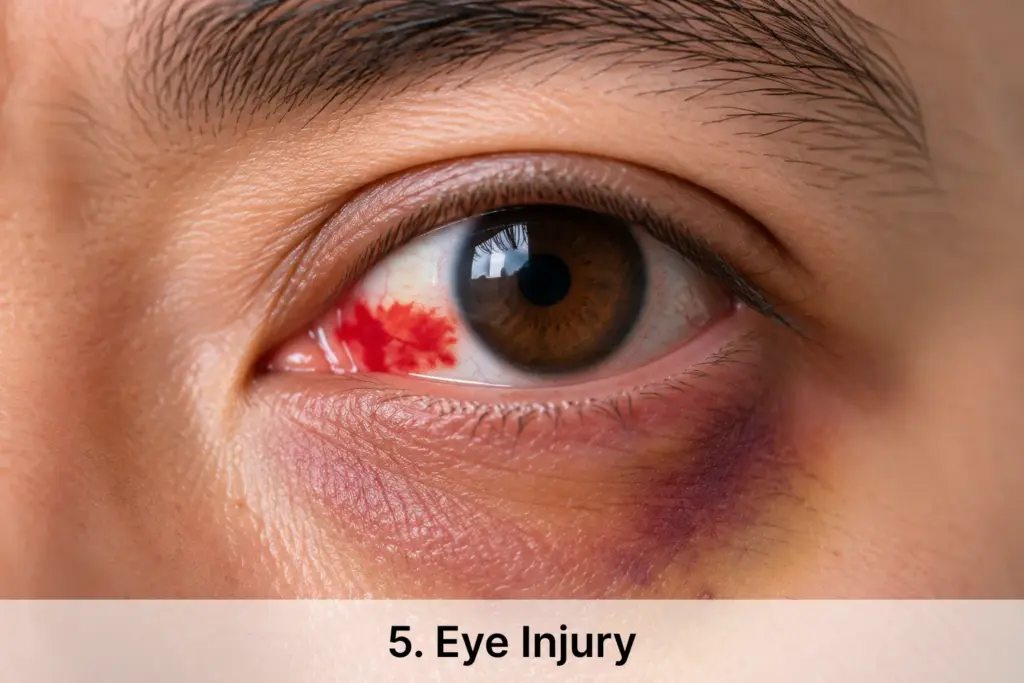
5. Eye Injury
Any blunt or sharp injury to the eye deserves urgent assessment, even if the eye looks fine on the surface.
Examples include:
- Metal fragments
- Chemical splashes
- Blunt trauma from sports
- Penetrating injuries
- Firework injuries
Do not press on, rub, or attempt to remove an object embedded in the eye; cover it loosely and get to an emergency room immediately.
Any form of chemical injury should be addressed immediately with saline/cold water irrigation to wash away as much of the offending chemicals. This limits the damage caused by the chemical injury.

6. Chemical Exposure to the Eye
Any chemical splash — cleaning products, industrial solvents, pool chemicals — requires immediate action, even before you get to a hospital.
- Rinse continuously with clean water for at least 15–20 minutes.
- Remove contact lenses if possible.
- Seek emergency medical care immediately.
Alkali chemicals (like drain cleaners or cement) are especially dangerous because they penetrate tissue quickly and can cause severe, lasting damage.
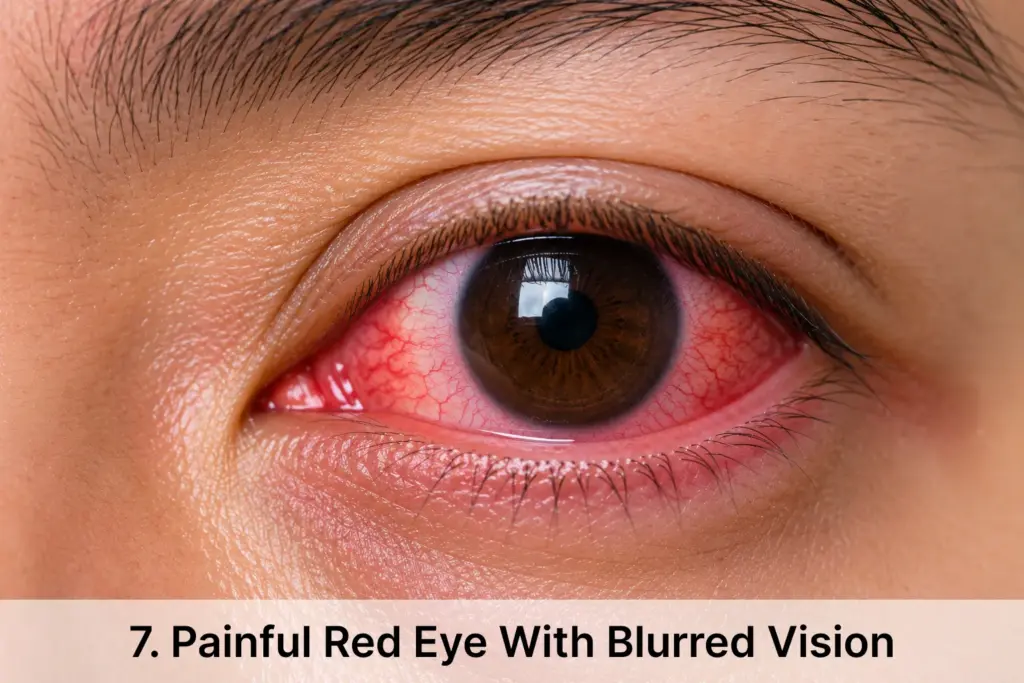
7. Painful Red Eye With Blurred Vision
A red eye is often nothing more than conjunctivitis, but when redness is accompanied by pain or reduced vision, more serious conditions need to be ruled out.
These include:
- Uveitis
- Corneal ulcer
- Severe eye infection
- Acute glaucoma
Because these conditions have different treatments and some can progress quickly, professional assessment is important to identify the cause and start the right treatment without delay.

8. Sudden Distortion of Vision
Straight lines appearing bent or wavy, or a new dark or blurred spot in the centre of your vision, may point to a problem affecting the macula — the part of the retina responsible for sharp, central vision.
Possible causes include:
- Wet age-related macular degeneration
- Macular hole
- Diabetic macular oedema
Many of these retinal conditions respond far better when treatment starts early, so this symptom should be assessed promptly rather than monitored at home.
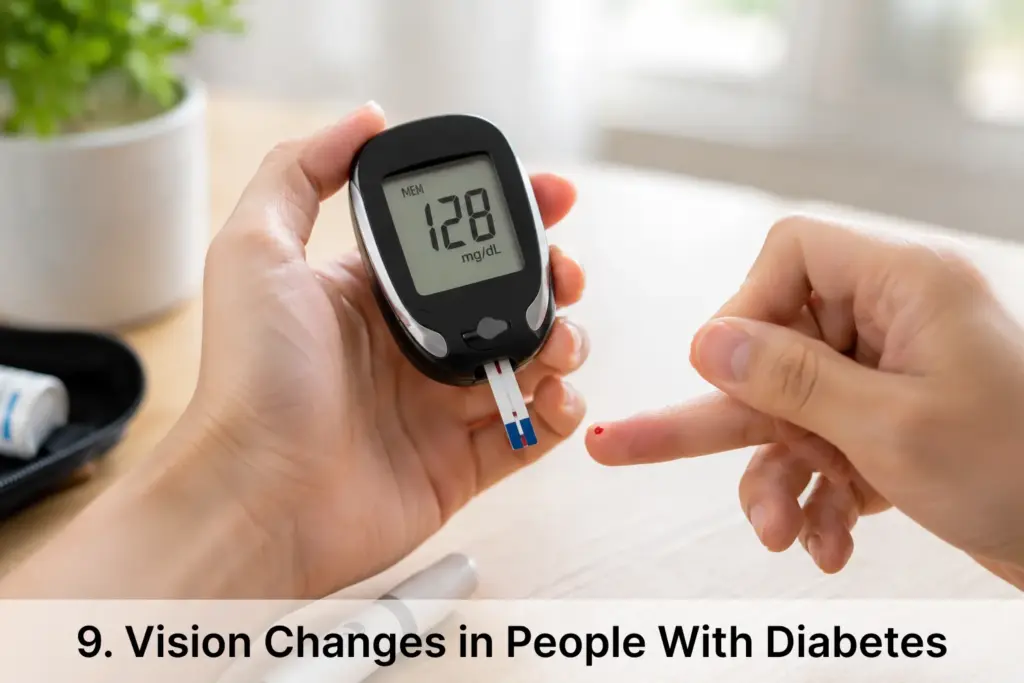
9. Vision Changes in People With Diabetes
People living with diabetes should seek prompt review if they notice:
- Blurred vision
- Floaters
- Dark patches
- Difficulty reading
- Sudden visual changes
These may indicate diabetic retinopathy or diabetic macular oedema and should prompt a timely eye review. Early detection and treatment can reduce vision loss and potentially recover vision.
Symptoms That Need Prompt (Same-Day or Next-Day) Attention
Not every concerning symptom requires an ER visit, but these should not wait for a routine appointment:
- Sudden vision loss
- New flashes with numerous floaters
- A curtain over your vision
- Severe eye pain
- Eye trauma
- Chemical injury
- Sudden double vision
- Severe redness with blurred vision
- A stye or lid swelling that worsens rapidly, spreads, or comes with fever
If you are unsure, it is generally safer to seek medical assessment promptly rather than wait.
What You Can Do While Seeking Care
- Do not rub or press on an injured or painful eye
- Do not attempt to remove embedded objects
- Remove contact lenses if you’re able to do so without discomfort, unless there’s a penetrating injury
- Avoid driving yourself if your vision is significantly impaired — have someone else take you or call emergency services
- Bring a list of your current medications and any recent eye history to your appointment
Why Early Assessment Matters
Many serious eye conditions can progress rapidly. Sudden vision changes, significant pain, chemical exposure, and trauma are the eye’s way of signaling that something needs immediate attention.
When in doubt, it is always safer to be seen and reassured than to wait and risk permanent damage. If you’re ever unsure whether a symptom is an emergency, call an ophthalmologist’s urgent line or go to the nearest emergency department — vision lost to delay is often vision that cannot be recovered.

About OneVision Eye Specialist & LASIK Centre
For patients who require specialist assessment, OneVision Eye Specialist & LASIK Centre provides comprehensive ophthalmology services in Singapore, including the diagnosis and management of retinal diseases, glaucoma, cataracts, corneal conditions, emergency eye problems, and refractive surgery.
The clinic is led by experienced ophthalmologists using advanced diagnostic imaging and treatment technologies to provide timely evaluation and personalised care.
This article is for general educational purposes and is not a substitute for professional medical advice. If you are experiencing any of the symptoms described above, seek immediate medical attention.