
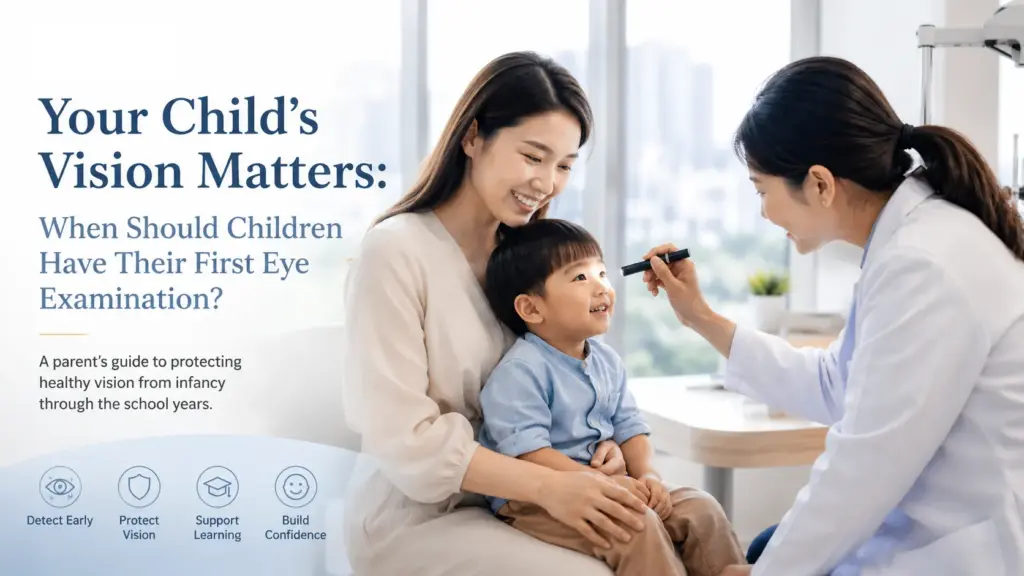
A parent’s guide to protecting healthy vision from infancy through the school years.
As parents, we celebrate every milestone—your baby’s first smile, first steps, first words, and first day at school. But how about your child’s first comprehensive eye examination?
Many childhood eye conditions develop quietly. Unlike adults, young children cannot express themselves. Blurred vision to them might just be something normal.
Early detection can make a significant difference. Many eye conditions can be treated more effectively when identified during a child’s early years, helping support healthy visual development, learning, and everyday life.
Why Children’s Vision Is So Important
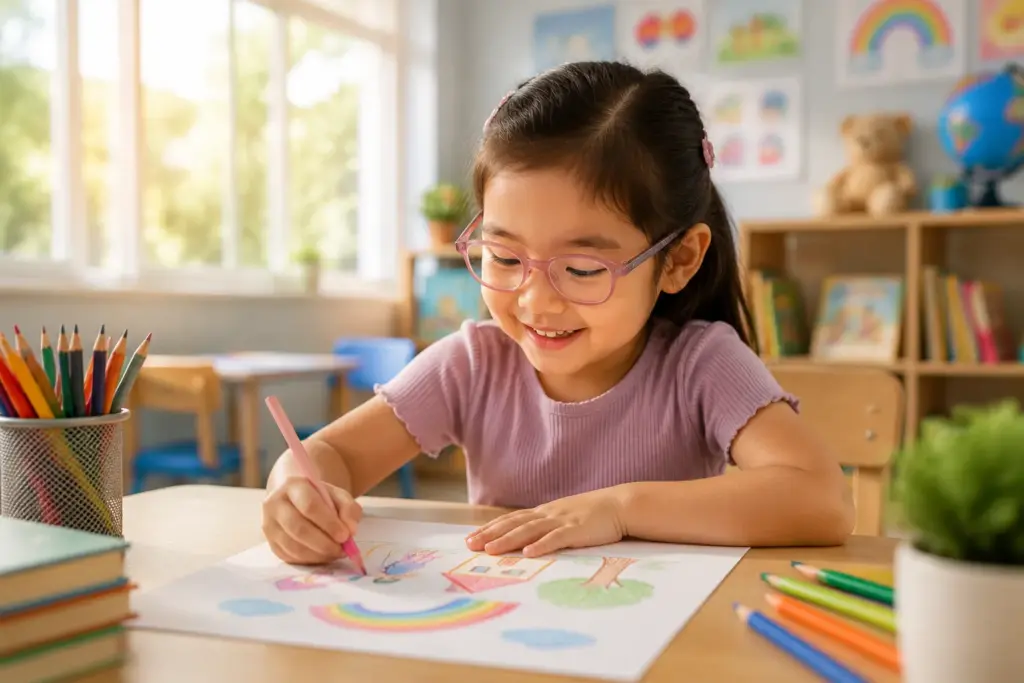
Vision plays a vital role in a child’s physical, social, and intellectual development.
Children rely on their eyesight to:
- Learn to read and write
- Recognise faces and expressions
- Develop hand-eye coordination
- Participate confidently in sports
- Explore and understand the world around them
It is estimated that much of a child’s learning during the early school years is visual. Poor vision may affect academic performance, concentration, confidence, and even behaviour.
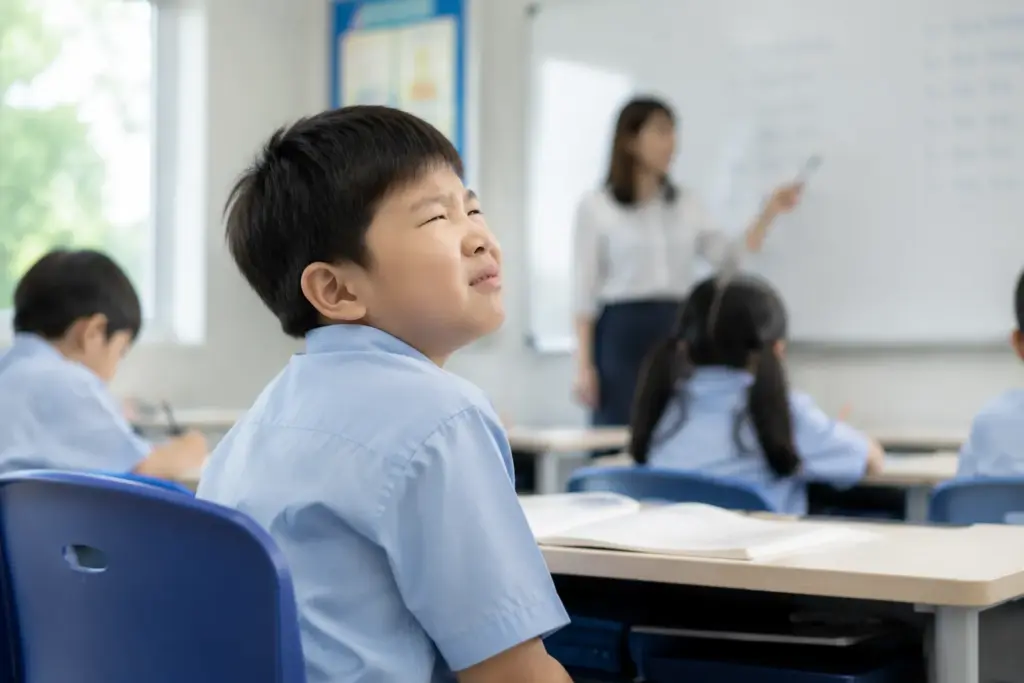
Sometimes a child labelled as “not paying attention” may actually be struggling to see the whiteboard.
Children Rarely Tell You They Can’t See
One of the biggest challenges is that children rarely complain about poor vision.
Unlike adults who immediately notice blur, children simply adapt.
They may:
- Move closer to the television
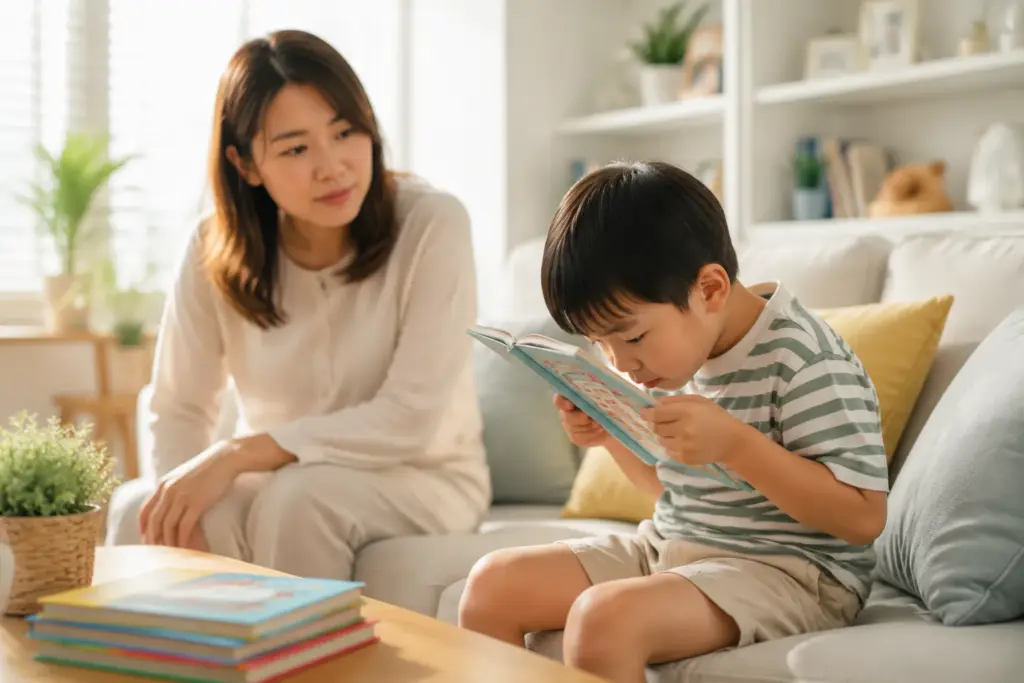
- Hold books very near their face
- Squint frequently
- Close one eye
- Tilt their head
- Memorise classroom materials instead of reading clearly
- Avoid drawing or reading
- Lose interest in schoolwork
Parents and teachers may not notice these subtle signs until the problem becomes more advanced.
This is why routine eye examinations are important—even when your child appears to have normal vision.
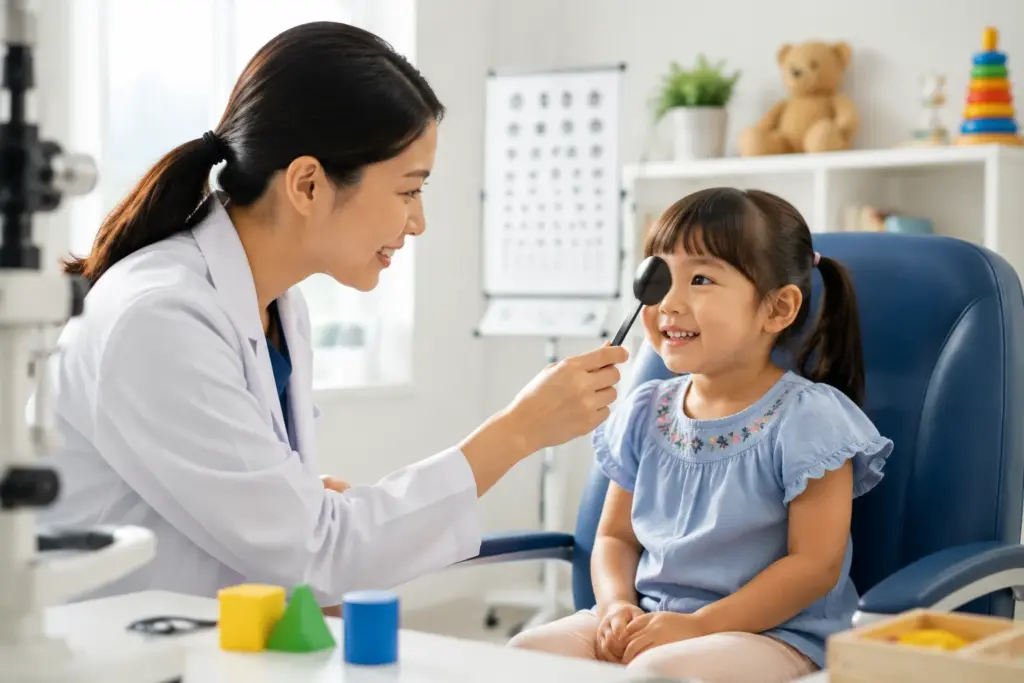
When Should Your Child Have Their First Eye Examination?
Every child is different, but these general milestones can help guide parents.
At Birth
Newborns undergo basic eye screening shortly after delivery by the paediatrician.
These checks look for obvious problems such as:
- Congenital cataracts
- Major structural abnormalities
- Severe infections
- Significant eyelid abnormalities
Although these examinations are important, they do not detect every eye condition.
During Infancy (6–12 Months)
An eye examination is recommended if your baby has:
- A family history of childhood eye disease
- Premature birth
- Developmental concerns
- Eyes that appear crossed after four months of age
- Persistent tearing
- White pupil in photographs
- Unusual eye movements
An ophthalmologist can assess whether the eyes are developing normally.
Around 3 to 5 Years Old
This is one of the most important times for a comprehensive eye examination.
By preschool age, many vision problems can be detected while they are still amenable for treatment.
An examination can identify:
- Short-sightedness (myopia)
- Long-sightedness (hyperopia)
- Astigmatism
- Lazy eye (amblyopia)
- Squint (strabismus)
Many of these conditions respond best when treated early.
Before Primary School
Even if your child has passed school vision screening, a comprehensive eye examination can provide a more complete assessment.
A specialist examination evaluates much more than visual acuity alone.
It may include assessment of:
- Eye alignment
- Eye coordination
- Depth perception
- Eye health
- Focusing ability
- Prescription if needed
Good vision helps children enter school ready to learn.
During the School Years
Children’s eyes continue to change as they grow.
With increasing screen use and intensive near work, childhood myopia has become increasingly common.
Regular eye examinations allow vision changes to be detected early so appropriate management can be discussed.
Signs Your Child Should See an Eye Specialist
Arrange an eye examination if you notice your child:
- Squinting often
- Sitting very close to the television
- Holding books close to the face
- Tilting their head
- Covering one eye
- Complaining of headaches
- Frequently rubbing their eyes
- Having difficulty catching a ball
- One eye turning inward or outward
- Excessive tearing
- Sensitivity to light
- White reflection in the pupil
- Drooping eyelids
If any of these symptoms appear suddenly, seek medical attention promptly.
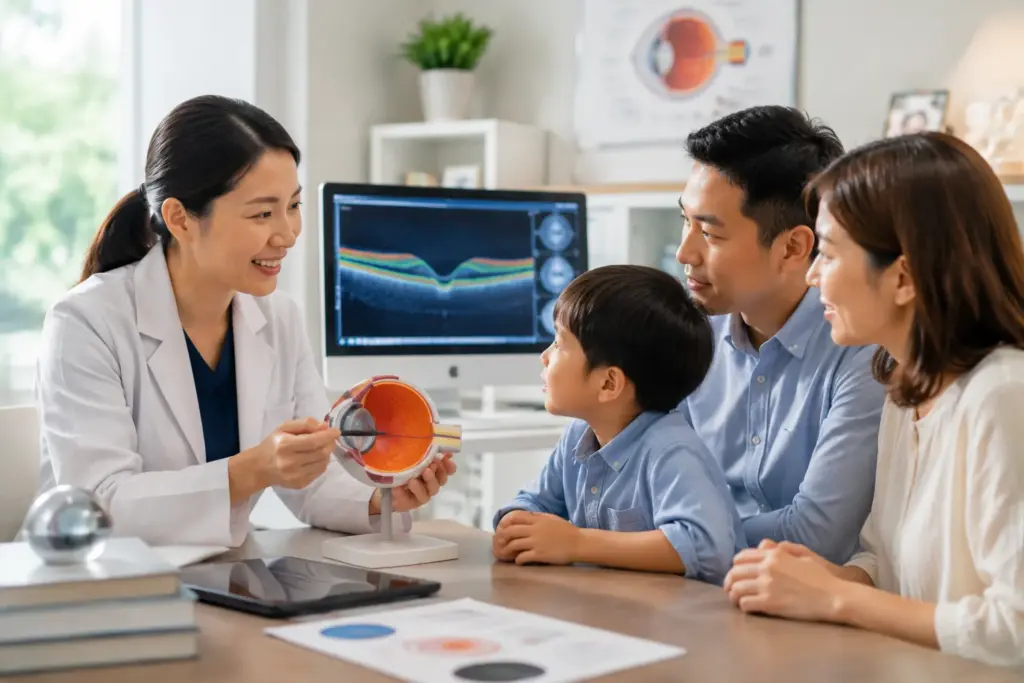
Common Childhood Eye Conditions
Myopia (Short-Sightedness)
Children with myopia can see nearby objects clearly but struggle to see distant objects.
Through early diagnosis, evidence-based interventions that may help retard myopia progression can be instituted, depending on the child’s needs.
Amblyopia (Lazy Eye)
Amblyopia occurs when vision in either or both eyes is poor, even after fitting the appropriate glasses. Treatment is generally more successful during early childhood while the visual system is still developing.
Strabismus (Squint)
The eyes are misaligned and binocular vision is hindered.
Treatment depends on the underlying cause and may include glasses, patching, eye exercises in selected cases, or surgery.
Congenital Cataracts
Although uncommon, babies can be born with cataracts.
Prompt diagnosis is essential because untreated cataracts can interfere with normal visual development.
Blocked Tear Ducts
Persistent watery eyes during infancy are often due to blocked tear ducts.
Many cases resolve naturally, but persistent symptoms should be evaluated.
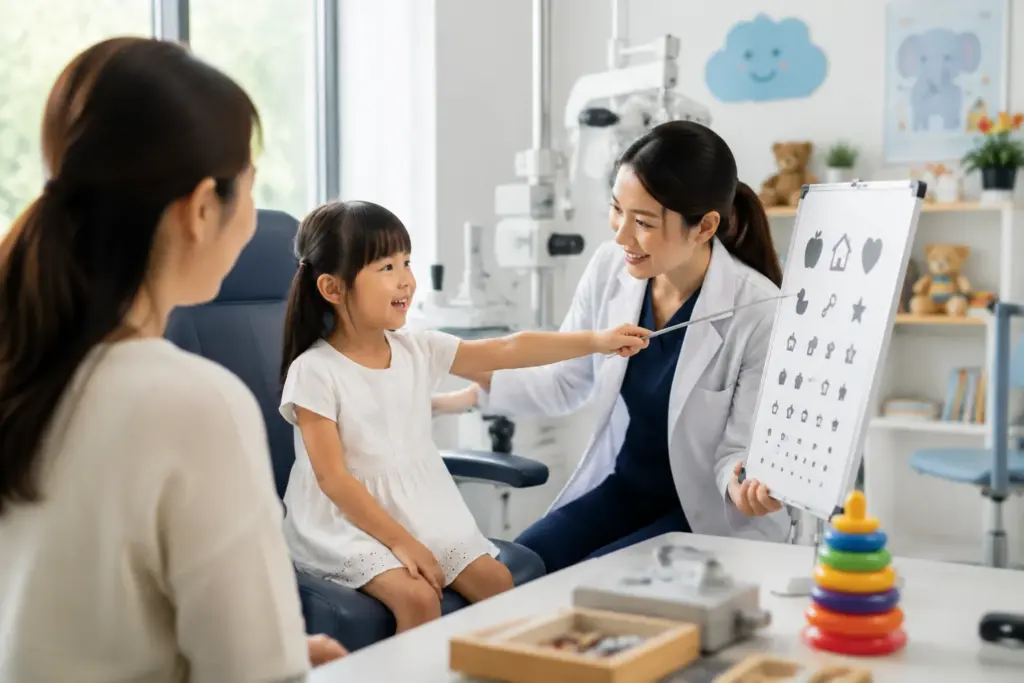
What Happens During a Children’s Eye Examination?
Parents are often surprised by how child-friendly a specialist eye examination can be.
Depending on your child’s age, the examination may include:
- Assessment of visual development
- Vision testing by age group
- Eye movement evaluation
- Eye alignment assessment
- Refraction to determine spectacle prescription
- Examination of the front and back of the eye
- Dilating eye drops when clinically indicated
Most examinations are painless, and the clinical team will adapt the assessment to suit your child’s age and level of cooperation.
Frequently Asked Questions
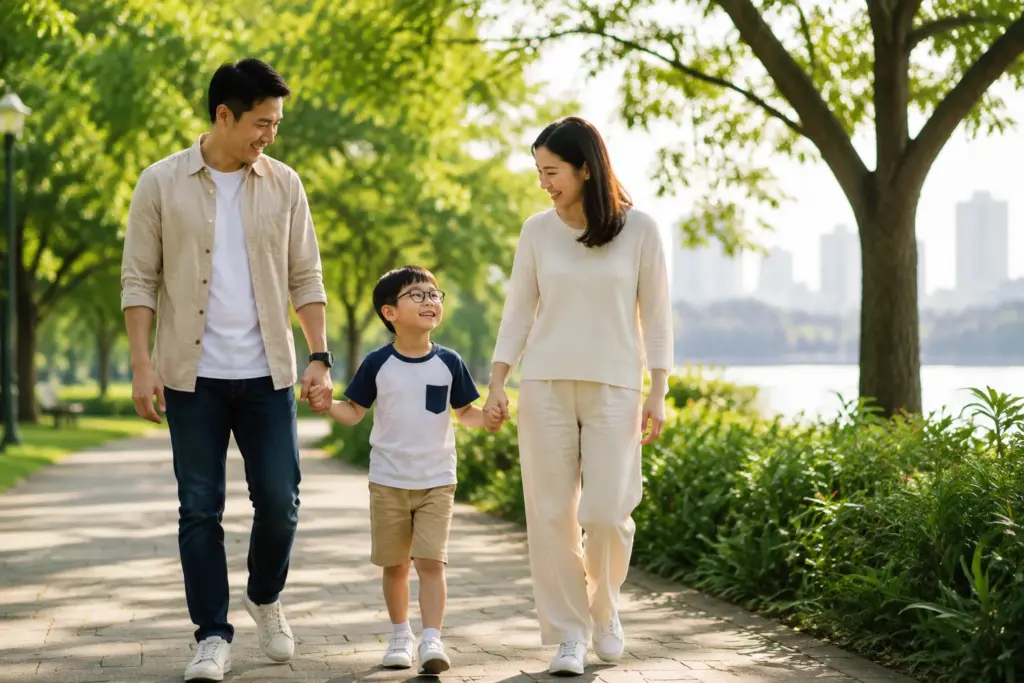
Supporting Your Child’s Vision for the Future
Healthy vision supports every stage of childhood—from learning and playing to building confidence and independence.
The earlier vision problems are identified, the greater the opportunity to protect normal visual development and address concerns before they begin affecting daily life.
Whether your child is an infant, a preschooler, or preparing to enter primary school, a comprehensive eye examination can provide reassurance and help ensure their eyes are developing as expected.
At OneVision Eye Specialist & LASIK Centre, our team provides comprehensive paediatric eye assessments for children of all ages. As an Approved Institution registered with Singapore’s Ministry of Social and Family Development under the Baby Bonus Scheme, eligible families may also enquire about using applicable Baby Bonus benefits for qualifying services. Our team will be happy to advise you on the current eligibility and claims process.
If you have concerns about your child’s eyesight—or simply want peace of mind—consider scheduling an eye assessment with an eye specialist. Early attention today can help support a lifetime of healthy vision.
Written by:
Dr Philemon Huang
Medical Director, Senior Consultant Ophthalmologist
MBBS (S’pore), MMed (Ophth), FAMS, FRCOphth
Reviewed by:
Dr. Ng Wei Yan
Paediatric Eye Specialist
MBBS (Singapore), MMed (Ophthalmology), FRCOPHTH, FAMS (Singapore)