

Cataracts are one of the leading causes of vision loss, particularly for those who are elderly. They occur when the natural lens of the eye becomes cloudy, and cloudiness makes it difficult to see clearly. Daily tasks, driving, reading and recognising people’s faces may become difficult. With today’s safe and effective surgical options for cataract removal, it’s possible to regain your vision and enjoy life again.
There are more choices available for cataract surgery today. The traditional phacoemulsification procedure continues to be the most widely used method around the world. One of the adjunctive procedure is Femtosecond Laser Assisted Cataract Surgery (FLACS). Both procedures involve removing the cloudy lens with ultrasound (phacoemulsification) and inserting an artificial intraocular lens (IOL); FLACS utilises laser technology to help with certain aspects of the procedure.
Patients are always curious whether they are better off with laser-assisted surgery or not. It’s not always easy to get right. Your eye surgeon will decide which procedure is best for you depending on your eye health, lifestyle, medical history, and desired vision goals— the doctor would not use one procedure for all of his patients as it might not confer significant benefit.
This guide discusses when an eye doctor might suggest FLACS over conventional phacoemulsification cataract surgery and what factors will affect the decision.
Understanding Conventional Cataract Surgery
The typical cataract surgery uses a method known as phacoemulsification. While performing the surgery, the surgeon makes small incision in the eye, and then fragments the cloudy lens with ultrasound energy. These fragments are gently removed prior to the installation of a synthetic lens.
Over the past many decades, this procedure has been refined, and it offers very good consistent results for the majority of patients. Safe, effective, and appropriate for most types of cataracts, it continues to be the treatment of choice for millions of cataract procedures each year.
What Is Femtosecond Laser Cataract Surgery?
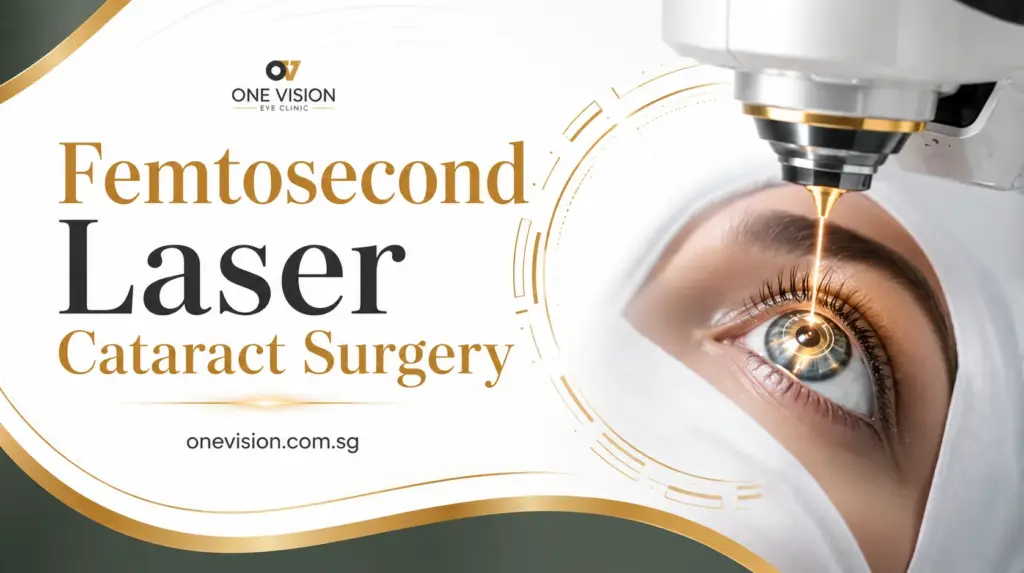
Femtosecond Laser Assisted Cataract Surgery (FLACS) is a combination of advanced laser technology to assist with certain steps of the conventional cataract surgery. The surgeon uses a computer-controlled femtosecond laser to do some of the steps, rather than doing them manually.
The laser can help with:
● Creating corneal incisions
● Cutting the anterior capsule/membrane of the lens.
● Splitting the cataract and fractionating it prior to its removal
● Making accurate incisions which may aid in the control of astigmatism in certain patients.
While the laser takes care of these important steps, the surgeon completes all of the cataract removal and implants the new intraocular lens. This does not mean laser cataract surgery replaces the skill and judgment of an experienced ophthalmologist; it augments the procedure.
How Does Your Eye Surgeon Decide What Is the Best Procedure?
Each patient’s eyes are unique. Before your surgeon recommends surgery, a detailed consultation will help your surgeon know more about the condition of your eyes.
Your assessment will encompass:
● Visual acuity testing
● Corneal measurements
● Optical Coherence Tomography (OCT)
● Corneal topography
● Eye pressure measurement
● Retinal examination
● Intraocular lens calculations/Biometry
The tests enable your surgeon to suggest the treatment that will be the most visually successful and the safest way to perform treatment.
When Is FLACS Recommended?
There are no definitive factors that indicate that some people need Femtosecond Laser Cataract Surgery. Rather, doctors take into account multiple clinical factors before recommending surgery.
1. When a more precise surgical technique is advantageous
The major benefit of FLACS is its ability to make highly accurate cuts and fragmentation of the cataract substance, a consistently sized and shaped opening in the anterior lens capsule and incisions on the cornea to aid in astigmatism control.
This accuracy may be beneficial to patients who need more uniformity in their surgical planning eg. Complex subtypes of cataract. Customisation of each step, based on detailed imaging of the eye, is provided by the laser.
In certain patients, this precision can aid in reducing the high risk of complex cataract surgery.
2. If planning for Premium Intraocular Lenses
Some patients opt for higher quality intraocular lenses because they want to see if they can get by without wearing glasses after surgery.
Examples include:
● Multifocal lenses
● An extended depth of focus (EDOF) lens
● Astigmatism lenses – Toric.
These high-tech lenses work best when accurately placed in the eye. Because laser cataract surgery results in a very accurate opening of the anterior lens capsule, which may help in optimizing the effective intraocular lens position, some surgeons may offer FLACS to patients who choose high-quality lens implants.
3. In cases where correction of Astigmatism is required
A large proportion of people suffer from astigmatism as well as cataract.
With Femtosecond Laser Cataract Surgery, the laser can be used to accurately sculpt incisions in the cornea that can help to minimise mild astigmatism. If your surgeon thinks you have a significant amount of astigmatism, they may suggest using a toric IOL as it corrects higher amount of astigmatism.
Corrective lenses used in cataract surgery can enhance visual function following surgery.
4. When Less Ultrasound Energy is Preferred
In traditional surgery, the cloudy lens is broken apart by using ultrasound energy.
FLACS is a laser technique that fragments and breaks up the cataract prior to the ultrasound removal. This can decrease the amount of ultrasound energy needed during surgery in some patients.
For patients with certain corneal conditions, a decrease in the energy of ultrasound may be helpful; complex subtypes of cataract which may have increased intra-operative complications can also benefit from the laser-assisted fragmentation, reducing the complication risk.
5. When Corneal Health Requires Extra Care
The cornea has delicate endothelial cells in the inner cornea lining which help maintain the transparency of the cornea.
In cases where endothelial cell count is lower, or there is any corneal disease, appropriate surgical planning needs to be done carefully. For certain patients, the laser cataract surgery may enable the doctor to utilize an overall lower amount of ultrasound energy, to help keep these important cells safe.
Your ophthalmologist will decide if this is an option for you based on detailed pre-operative testing.
6. If the Eye has Complex Anatomy
The eyes have different shapes and structures.
Some patients have:
● Shallow anterior chambers
● Irregular corneas
● Small pupils
● Previous eye surgery
● Other anatomical variations
During Femtosecond Laser Cataract Surgery, advanced imaging allows the surgeon to plan his surgery with greater accuracy. FLACS can be included with surgery if the eye and cataract is complicated.
7. If cataracts impact everyday activities
The age of a person is not the only factor that determines whether or not a cataract will be removed; rather, it is based on the extent to which a cataract is interfering with a person’s daily life.
You may be advised to undergo surgery if cataracts make it difficult to:
● Drive safely
● Read comfortably
● Recognise faces
● Watch television
● Use digital devices
● Work efficiently
● Enjoy hobbies
If your surgeon suggests the surgery, and you fit the clinical criteria, your surgeon may discuss whether there are benefits to FLACS in your case.
When conventional cataract surgery may be a better option?
Femtosecond Laser Assisted Cataract Surgery is a high-tech procedure, but it’s not necessarily the most suitable choice for everyone.
Traditional phacoemulsification is still highly effective and its accuracy and outcomes are extremely good.
Your surgeon might suggest conventional phacomeulsification cataract surgery if:
● Your cataract is uncomplicated.
● The eye is well suited for conventional surgery.
● There are no factors affecting the position of high-quality lens.
● No statistical benefits from FLACS.
● High rate of achieving the desired effect through traditional surgery safely.
There is no single “right” treatment; rather, it relies on the person involved and not the technology.
Does FLACS Produce Better Vision?
A lot of patients think that laser-assisted cataract surgery is guaranteed to give them better eyesight than conventional phacoemulsification cataract surgery.
Both procedures have been found to yield equally good visual outcomes when performed by experienced surgeons.
The difference is in the way some surgical procedures are carried out. The laser’s precision might help certain patients achieve certain surgical objectives. But for most people, conventional phacoemulsification cataract surgery also provides a good long-term outcome.
This is the reason that your surgeon will take into account your eye condition when deciding between one procedure and another.
Questions to ask before you choose FLACS
The first step in making an informed decision is to become acquainted with your choices.
Consider asking your eye surgeon:
● What are the criteria for being a good candidate for Femtosecond Laser Assisted Cataract Surgery?
● What is the likelihood that conventional cataract surgery would improve my eyes as well?
● Which type of IOL should be used?
● Is it possible to correct my astigmatism during the surgery?
● In my particular situation, what are the advantages of FLACS?
● Are there any other risks or costs?
These questions may help you to better understand why a certain procedure has been recommended.
Recovery After Cataract Surgery
Usually, recovery from conventional surgery and laser cataract surgery is smooth.
In most cases, your doctor will see gradual improvement in vision in the first few days, and full recovery may take weeks.
During recovery, your surgeon may recommend:
● Following the treatment of the eyes as prescribed by the doctor
● Refraining from rubbing the eye.
● Having a protective eye shield while sleeping.
● Not swimming until instructed by the medical professional.
● Keeping regular follow-up appointments
● Refraining from strenuous activity in the early healing period
By following these guidelines, you can help heal and prevent complications.
Opt for an experienced eye surgeon – why does it matter?
The success of your eye surgeon’s operation, whether you have traditional or Femtosecond Laser Cataract Surgery, is largely dependent on how the procedure is done.
A qualified surgeon will examine your eyes, discuss your treatment options, determine the best option for you, and follow up with you following surgery.
Modern eye care relies heavily on advanced technology, but it’s best when backed up by careful planning and clinical skill and tailored to each patient’s needs.
Personalised Cataract Care at OneVision
At OneVision, we recognize that each person’s vision requirements and desires are different. This is why we spend the time to do a full eye exam before making a recommendation for the most appropriate treatment. We always try to deliver safe, personalised and evidence-based care, whether it’s conventional cataract operation techniques or Femtosecond Laser Assisted Cataract Surgery. With sophisticated diagnostic equipment and a team of expert ophthalmologists like Dr Philemon Huang and Dr. Leslie Ang Pek Seng, we will perform a thorough eye examination, discuss the treatment options in your case in a clear and precise manner and lead you through your surgical experience with confidence and compassion.
Conclusion
It is not just a question of picking the latest technology when deciding between conventional cataract surgery and Femtosecond Laser Assisted Cataract Surgery. Choosing the right procedure will depend upon your eye health, the type of cataract you have, your lifestyle, and your vision goals.
For some patients, laser cataract surgery may be more precise in some aspects of the surgery, but for many, conventional cataract surgery still results in a successful outcome. The best way to find out which method will work best for you is to have a thorough examination with a qualified eye doctor.
Each choice has its advantages and understanding these along with having the discussion with your eye specialist.
Frequently Asked Questions
1. Who is a suitable candidate for femtosecond laser assisted cataract surgery?
Femtosecond laser cataract surgery may be suitable for patients with cataracts who could benefit from greater surgical precision, those considering premium intraocular lenses (IOLs), or individuals with certain corneal or cataract conditions. A comprehensive eye examination is necessary to determine whether this approach is appropriate for your specific eye health and vision goals.
2. Is femtosecond laser assisted cataract surgery better than conventional cataract surgery?
Both procedures are safe and effective when performed by an experienced ophthalmologist. Femtosecond laser cataract surgery offers greater precision for certain steps of the procedure, while conventional cataract surgery continues to provide excellent outcomes for many patients. Your eye surgeon will recommend the option that best suits your condition.
3. Does femtosecond laser assisted cataract surgery reduce recovery time?
Most patients experience a smooth recovery after both conventional cataract surgery and femtosecond laser cataract surgery. While some patients may notice visual improvement within a few days, complete healing typically takes four to six weeks. Recovery depends on your overall eye health and how well you follow your surgeon’s post-operative instructions.
4. Can femtosecond laser assisted cataract surgery correct astigmatism?
Yes. In selected patients, femtosecond laser cataract surgery can be combined with techniques that help reduce mild astigmatism. Your ophthalmologist may also recommend a toric intraocular lens if you have moderate to higher levels of astigmatism to improve your vision.
5. What factors does an eye surgeon consider before recommending femtosecond laser assisted cataract surgery?
Your eye surgeon will assess several factors, including the severity of your cataract, corneal health, eye anatomy, presence of astigmatism, retinal condition, lifestyle needs, and the type of intraocular lens you choose. Based on these findings, they will recommend whether femtosecond laser cataract surgery or a conventional cataract operation is the most suitable treatment for you.