

By Dr. Philemon Huang, MBBS (S’pore), MMed (Ophth), FAMS, FRCOphth | Senior Consultant Ophthalmologist
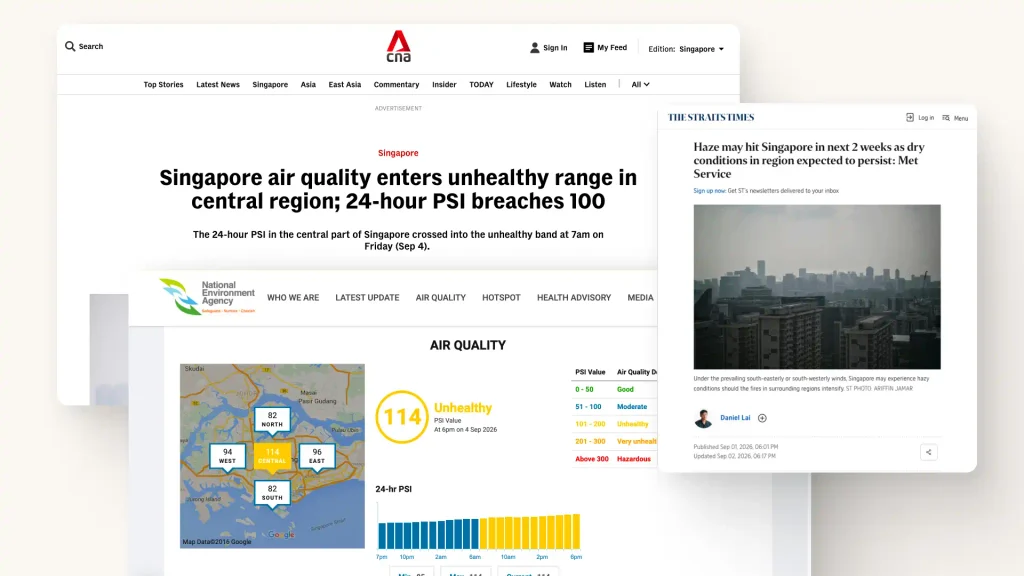
If your eyes have felt unusually dry or uncomfortable lately, the haze may be partly to blame.
Smoke haze contains fine particles and other airborne pollutants. When these settle on the surface of the eye, they can disturb the tear film—the thin layer of moisture that keeps our eyes comfortable. The result may be stinging, watering, redness or that familiar feeling that there is sand in the eyes.
People who already have dry eyes, allergies or sensitive eyes may notice the discomfort sooner. Contact lens wearers can also find that their lenses become uncomfortable more quickly than usual.

Why can haze make the eyes water?
It may seem strange for dry, irritated eyes to become watery. In fact, watering is one of the eye’s natural responses to an irritant. The eye produces extra tears in an attempt to wash the particles away.
Unfortunately, these reflex tears do not always lubricate the eye very well. Your eyes may therefore be watering and still feel dry at the same time.

What can you do when the haze irritates your eyes?
A few simple measures may make the day more comfortable.
Spend less time outdoors when the air quality worsens. Check the latest air-quality readings on the NEA haze portal or the myENV app, particularly before exercising or spending a long period outside.
Resist the urge to rub your eyes. Rubbing may feel satisfying for a moment, but it can aggravate the irritation. It also transfers dirt and bacteria from the hands to the eyes.
Try lubricating eye drops. Artificial tears can help rinse and moisturise the surface of the eye. If you need to use them frequently, ask your pharmacist or eye doctor whether a preservative-free formulation would be more suitable. Avoid medicated or “redness-relief” drops unless they have been recommended for you.
Apply a cool compress. Place a clean, cool cloth over your closed eyelids for five to ten minutes. This can be soothing when the eyes feel itchy, warm or irritated.
Wear glasses outdoors. Glasses or sunglasses cannot seal the eyes completely, but they may reduce direct exposure to wind, dust and airborne particles.

Take a break from contact lenses. If your lenses start to sting or feel dry, remove them and switch to spectacles. Do not continue wearing a lens that is causing pain or persistent redness. Singapore’s HealthHub similarly advises wearing glasses instead of contact lenses when the eyes are irritated.
Pay attention to your indoor environment. Keeping windows closed and using an appropriate air purifier may help when outdoor air quality is poor. At the same time, avoid allowing a fan or air-conditioning vent to blow directly at your face, as this can make the tear film evaporate faster.
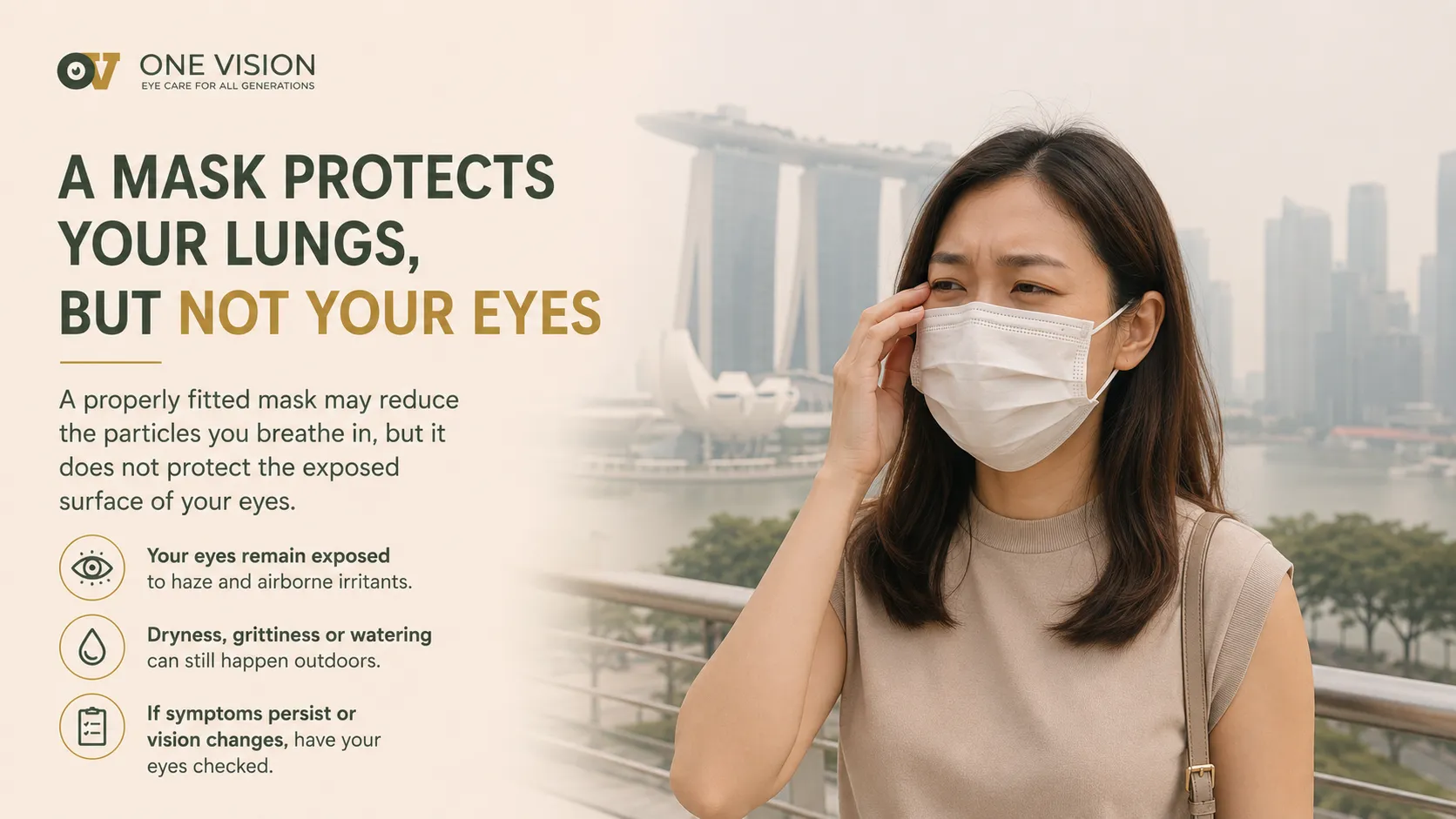
A mask protects your lungs, but not your eyes
A properly fitted mask may reduce the amount of fine particulate matter that you breathe in, but it does not protect the exposed surface of your eyes. Eye discomfort can therefore occur even when you have been diligent about wearing a mask outdoors.
This does not necessarily mean that something serious has happened. Mild haze-related irritation often settles after exposure is reduced and the eyes are lubricated. However, not every red or uncomfortable eye should automatically be blamed on the haze.

When should you have your eyes checked?
Arrange an eye examination if you experience:
- Significant eye pain
- Sensitivity to light
- Blurred or reduced vision
- Thick, sticky or pus-like discharge
- Marked swelling around the eye
- Redness affecting mainly one eye
- Contact-lens discomfort that continues after the lens is removed
Symptoms that persist or become worse despite simple measures
Sudden changes in vision, severe pain, an eye injury or chemical exposure require prompt medical attention. SingHealth also advises urgent assessment for sudden vision loss, double vision, multiple new floaters or pain in the eyes.
People who have recently undergone eye surgery or laser vision correction should follow the aftercare instructions given by their surgeon. If there is increasing pain, redness or a change in vision, contact the clinic rather than treating it as ordinary haze irritation.
Don’t ignore an eye that does not feel right
During hazy periods, a little dryness or grittiness is common. Resting the eyes, reducing outdoor exposure and using suitable lubricating drops may be enough to bring relief.
But symptoms such as pain, discharge or blurred vision deserve a closer look. Haze can irritate the eyes; it should not become an explanation for every eye problem.
If your discomfort is persistent or you are unsure what is causing it, an eye examination can distinguish simple surface irritation from dry eye, allergy, infection or another eye condition.
Watch: 5 Simple Ways to Keep Your Eyes Comfortable During Haze Season
If the haze is making your eyes feel itchy, watery or uncomfortable, a few simple changes can help.
In this short video, Dr Philemon Huang shares five practical tips: avoid rubbing irritated eyes, switch from contact lenses to glasses, use lubricating eye drops, try a cold compress, and seek an eye specialist’s advice if the discomfort does not improve.
Watch the video below for Dr Huang’s quick guide to looking after your eyes during hazy weather.

If your symptoms continue despite these measures—or if you develop pain, worsening redness or changes in vision—it is worth having your eyes checked rather than assuming the haze is the only cause.
Need an eye check?
Contact OneVision
Medical references: NEA haze portal, SingHealth eye-condition guidance and HealthHub guidance on irritated eyes.

OneVision Eye Specialist & LASIK Centre
3 Mount Elizabeth, #13-10 Medical Centre
Singapore 228510