

By Dr. Philemon Huang, MBBS, MMed (Ophth), FAMS | Senior Consultant Ophthalmologist
Glaucoma is sometimes called the “silent thief of sight” because it can damage the optic nerve without causing obvious symptoms in its early stages. By the time a person notices changes in their vision, some of the damage may already be permanent.
One of the questions patients frequently ask is:
“If my parent has glaucoma, will I get it too?”
The answer is not a simple yes or no. Glaucoma can run in families, and having a direct relative (eg. parent or sibling) with glaucoma increases your risk. However, most common forms of adult glaucoma are not inherited through a single gene in a predictable way.
Instead, glaucoma usually develops through a combination of genetic susceptibility, eye anatomy, ageing, eye pressure and other health or environmental factors.
This family connection is especially important in Singapore, where both open-angle glaucoma and angle-closure glaucoma are seen among the local Chinese, Malay and Indian populations.
Is Glaucoma Hereditary?

Glaucoma is better described as having a hereditary or genetic component rather than being directly inherited in every case.
If you have a parent or sibling with glaucoma, you are considered to be at higher risk. However, this does not mean that you will definitely develop the condition.
For most adults with primary open-angle glaucoma, researchers have identified many genetic variations that may each contribute risk. These genetic factors can affect features such as:
- Eye pressure
- Optic-nerve structure
- Corneal thickness
- Drainage of fluid from the eye
- The sensitivity of the optic nerve to pressure
Most adult glaucoma therefore does not follow a simple inheritance pattern where a parent passes one disease-causing gene directly to a child.
Certain less common forms of glaucoma, particularly congenital glaucoma, juvenile glaucoma and glaucoma developing at an unusually young age, may have a stronger connection to specific genetic mutations. Genetic counselling or testing may be considered in selected families, especially where several relatives developed glaucoma at a young age.
Routine genetic testing is not presently necessary for most people with typical late-onset glaucoma. A comprehensive eye examination remains more useful for determining whether a person currently has glaucoma or is at risk of developing it. (PubMed: Genetics and clinical testing for primary open-angle glaucoma)
Which Family Members Are at Higher Risk?
First-degree relatives have the closest biological relationship to someone with glaucoma. These include:
- Parents
- Brothers and sisters
- Children
The risk may be more significant when:
- More than one family member has glaucoma
- Glaucoma developed at a young age
- A relative has advanced glaucoma or severe vision loss
- Several generations of the family are affected
Why Is the Asian Context Important?
Glaucoma does not affect every ethnic population in exactly the same way.
Primary open-angle glaucoma is common worldwide. However, primary angle-closure glaucoma represents a particularly important cause of glaucoma-related vision loss in Asia.
Singapore National Eye Centre identifies primary angle-closure glaucoma as a major form of glaucoma in Singapore and the wider Asian region.
Angle closure occurs when the space between the iris and the drainage system of the eye becomes too narrow or becomes occluded. This prevents fluid from leaving the eye efficiently and may cause the eye pressure to increase.
Some of the anatomical characteristics associated with angle closure can run in families, including:
- A shallow anterior chamber
- Narrow drainage angles
- A shorter eyeball
- A relatively larger or more forward-positioned natural lens
- Long-sightedness, also known as hyperopia
Ageing can narrow the drainage angle further because the natural lens of the eye gradually becomes thicker over time.
Recognised risk factors for primary angle-closure disease include Asian ancestry, increasing age, female sex, long-sightedness, shallow anterior chambers and a family history of angle closure.
However, “Asian” is a broad category. Risk levels and glaucoma patterns can differ between Chinese, Malay, Indian and other Asian populations. An individual assessment is therefore more useful than relying on ethnicity alone.
What Has Singapore Research Found?
Singapore has contributed significantly to international research on glaucoma and angle-closure disease.
One Singapore study examined Chinese patients with primary angle closure or primary angle-closure glaucoma and their first-degree relatives.
The researchers found that:
- Narrow drainage angles had an estimated heritability of almost 60%.
- Siblings of affected patients had close to a 50% probability of having narrow angles.
- Siblings were more than seven times as likely to have narrow angles as the general population used for comparison.
These findings do not mean that half of all siblings will develop glaucoma. A narrow angle is a risk factor, not the same as optic-nerve damage or confirmed glaucoma.
Nevertheless, the study demonstrates why brothers and sisters of patients with angle-closure disease should consider being examined, even when they have no symptoms.
The Singapore Epidemiology of Eye Diseases study also found that more than two-thirds of glaucoma cases among adults aged 40 to 80 were previously undiagnosed.
In the Singapore Chinese Eye Study, researchers reported a high proportion of previously undiagnosed glaucoma. This highlights the difficulty of detecting glaucoma based on symptoms alone.
Can You Have Glaucoma Without High Eye Pressure?
Yes.
Although raised eye pressure is an important risk factor, glaucoma is defined by characteristic damage to the optic nerve. Some people develop glaucoma even when their eye-pressure readings fall within the statistically normal range.
Others may have high eye pressure without showing glaucoma damage.
For this reason, a screening test that measures only eye pressure cannot reliably rule out glaucoma. The American Academy of Ophthalmology advises that checking eye pressure alone is not enough to detect the condition.
This is especially relevant when someone has a family history. A person may have:
- Normal eye pressure but early optic-nerve damage
- Intermittent increases in eye pressure
- Narrow drainage angles
- Differences in corneal thickness that affect pressure readings
- Early structural changes before measurable peripheral vision loss occurs
What Does a Glaucoma Assessment Involve?
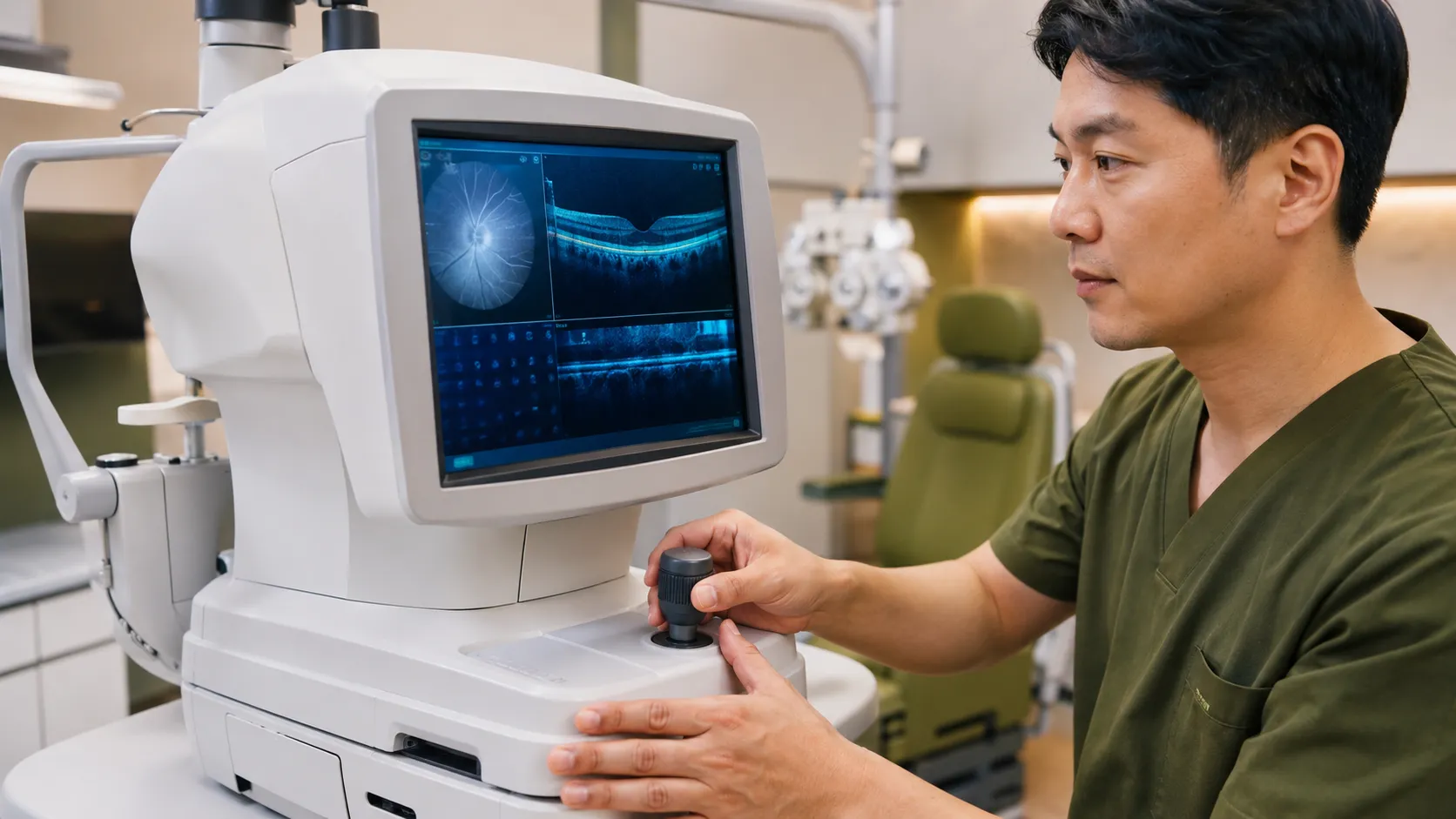
A glaucoma assessment may include several different examinations. The exact tests required depend on the person’s age, family history, symptoms and initial findings.
Eye-pressure measurement
Eye pressure, also known as intraocular pressure, is measured because elevated pressure is an important glaucoma risk factor.
However, one normal pressure measurement does not exclude glaucoma.
Optic-nerve examination
The ophthalmologist examines the optic nerve for changes associated with glaucoma, such as thinning or enlargement of the central optic-nerve cup.
Optical coherence tomography
Optical coherence tomography, or OCT, produces detailed scans of the optic nerve and retinal nerve-fibre layer. It may help identify structural thinning associated with glaucoma.
Visual-field testing
A visual-field test assesses peripheral vision. Glaucoma commonly affects side vision before central vision.
Gonioscopy
Gonioscopy allows the ophthalmologist to examine the drainage angle between the iris and cornea.
This examination is particularly important for Asian patients and relatives of people with narrow angles or angle-closure glaucoma. It helps determine whether the drainage angle is open, narrow or closed.
Corneal-thickness measurement
The thickness of the cornea can influence how eye-pressure measurements are interpreted and may be considered as part of an overall glaucoma risk assessment.
No single test provides every answer. The diagnosis is usually based on the combined findings from the eye-pressure measurement, optic-nerve assessment, imaging, drainage-angle examination and visual-field test.
When Should Relatives of Glaucoma Patients Be Checked?
There is no single examination schedule that is suitable for everyone.
The National Eye Institute in the United States advises people at higher risk, including those with a family history of glaucoma, to have comprehensive dilated (if able to dilate) eye examinations every one to two years.
The appropriate schedule should nevertheless be individualised by an eye-care professional. More frequent monitoring may be advised when a person has:
- Narrow drainage angles
- Raised eye pressure
- Suspicious optic-nerve findings
- A strong family history
- Glaucoma affecting several relatives
- A relative diagnosed at a young age
- Diabetes or other relevant medical conditions
- Previous eye injury or prolonged steroid exposure
Family members should not wait until they notice vision problems. Most chronic glaucoma develops gradually and may not cause pain, redness or obvious blurring in its early stages.
Does a Normal Eye Examination Mean There Is No Future Risk?
A normal examination is reassuring, but it does not necessarily mean that the person will never develop glaucoma.
Glaucoma risk changes with age. With regards to angle-closure glaucoma, the natural lens becomes thicker, the drainage angle may become narrower and the optic nerve may become more vulnerable over time. Regarding open-angle glaucoma, particularly for high-risk candidates, the disease might manifest years after the initial normal examination.
Someone with a family history may therefore need regular follow-up even when the first examination is normal.
The interval between examinations should be based on the person’s findings rather than family history alone.
Should Children Be Screened When a Parent Has Glaucoma?
Most glaucoma diagnosed in older adults does not require every young child in the family to undergo genetic testing.
However, an earlier ophthalmic assessment may be appropriate when:
- The affected parent developed glaucoma during childhood or early adulthood
- Several relatives developed glaucoma at a young age (eg. <45 years old)
- A known genetic mutation has been identified in the family
- The child has enlarged or cloudy-looking eyes
- There is excessive tearing or unusual sensitivity to light
- One eye appears larger than the other
- The child has a condition associated with congenital or childhood glaucoma
Parents should discuss the timing of the examination with an ophthalmologist, particularly when the family history involves congenital or juvenile glaucoma.
Warning Signs of Acute Angle Closure
Most chronic glaucoma causes few early symptoms. Acute angle closure is different and may develop suddenly.
Possible symptoms include:
- Severe eye pain
- Sudden blurred vision
- A red eye
- Headache
- Halos around lights
- Nausea or vomiting
Acute angle closure is an eye emergency. Anyone experiencing these symptoms should seek urgent medical attention rather than waiting for a routine appointment. Singapore National Eye Centre notes that untreated glaucoma damage is irreversible and that early diagnosis is important for preventing avoidable blindness.
The Main Message for Families
Glaucoma can run in families, but a family history is not a diagnosis.
Having a parent, sibling or child with glaucoma means that you should be more aware of your risk and consider a comprehensive eye examination. This is particularly important in Singapore and among Asian families, where inherited anatomical features may increase susceptibility to narrow drainage angles and angle-closure glaucoma.
Early assessment may identify:
- Raised eye pressure
- Narrow drainage angles
- Early optic-nerve changes
- Retinal nerve-fibre thinning
- Peripheral visual-field loss
Finding these changes early gives the ophthalmologist an opportunity to monitor or treat the condition before further irreversible vision loss occurs.
Case Study
We have had a 65-year-old male who was referred urgently for advanced glaucoma management. He was noted to have increased intraocular pressure (IOP) and a severely cupped disc/increased cup-disc ratio (CDR). His visual acuity was noted to be Right eye 6/48, Left eye 6/200 (considered legally blind). IOP was Right eye 40mmHg, Left eye 18mmHg; CDR Right eye 0.99, Left eye 1.0. Having only one good/seeing eye (the right eye), controlling the glaucoma/IOP was vital to preserving his vision.
After optimizing his IOP control with medicated eyedrops, his right eye IOP was at 21mmHg, which was still insufficient to preserve his remaining vision. We then performed cataract surgery with microstent implantation. After the procedure, his IOP was able to be maintained in the range of 9–11mmHg and on only one glaucoma eyedrop instead of four eyedrop medications. The sustained results were maintained for three years (till present). He also regained and maintained functional vision, with his right eye visual acuity at 6/24.
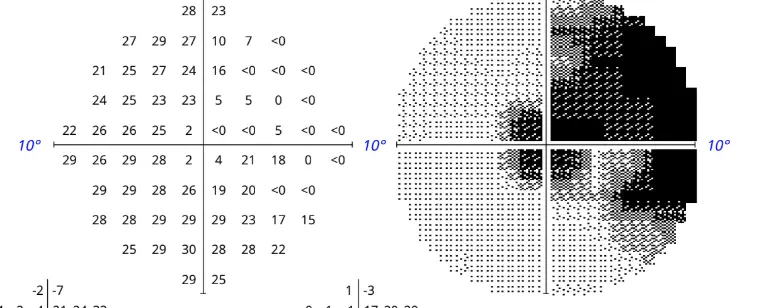
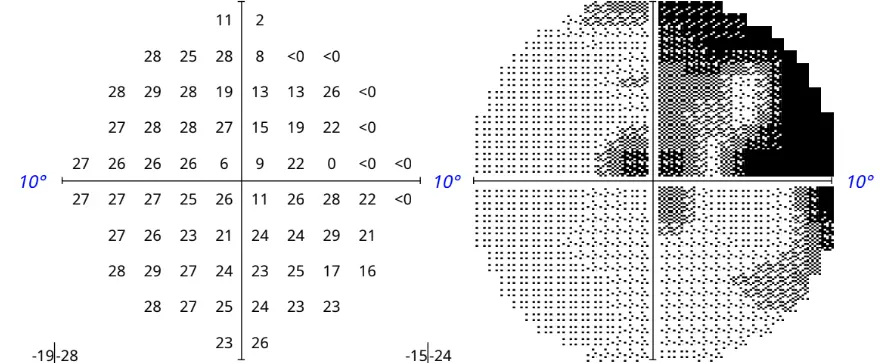
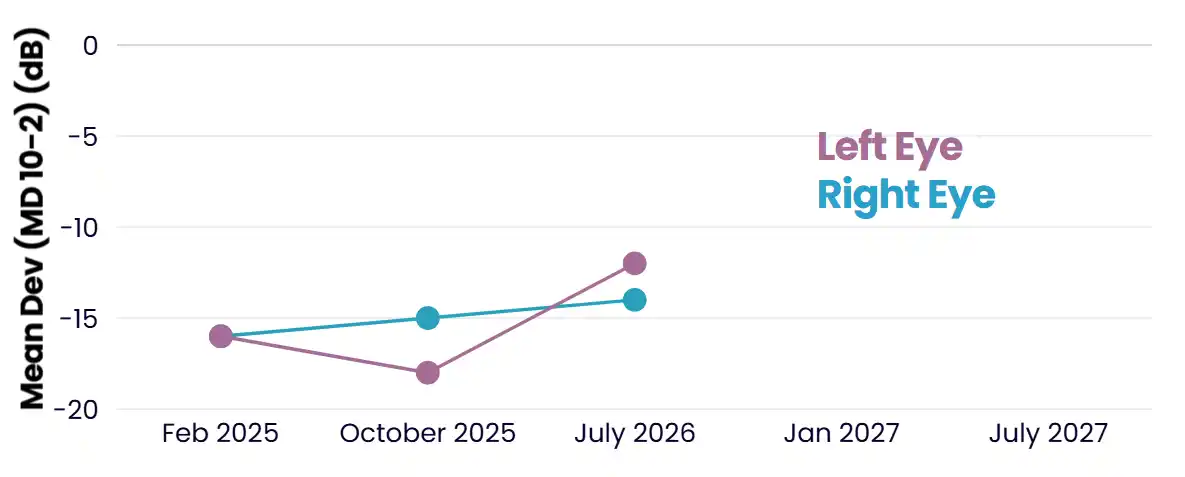
The Mean Deviation (MD) value on a 10-2 visual field test represents the average difference in decibels (dB) between the patient’s central 68 test points and age-matched normal reference values. The ideal value is 0dB. A –10 dB result means a 10 times loss of vision in the central part of the eye. The vision loss has remained relatively stable since glaucoma management started.
The patient’s son (30 years old), who accompanied his father since the initial treatment, learnt that glaucoma had a strong genetic/family history predisposition. He was asymptomatic (meaning no visual symptoms) and had good 6/6 vision in both eyes. Learning from his father’s good experience/outcomes, he decided to screen himself for glaucoma. He was then diagnosed with moderate glaucoma in both eyes. Treatment was instituted and his condition was controlled, preventing the glaucoma from progressing and hence preventing significant blindness.
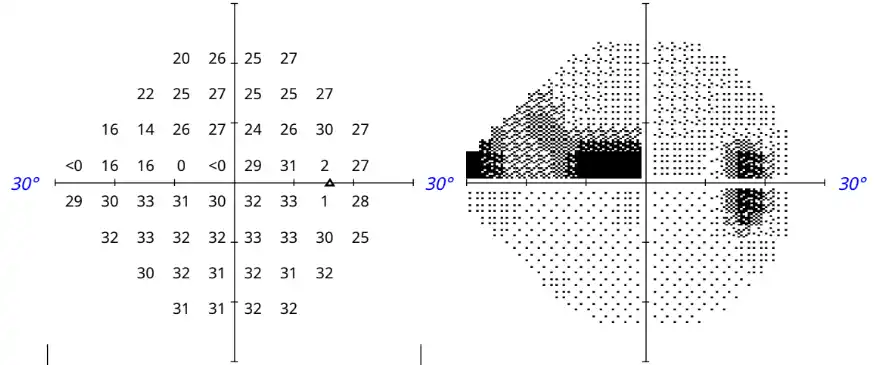
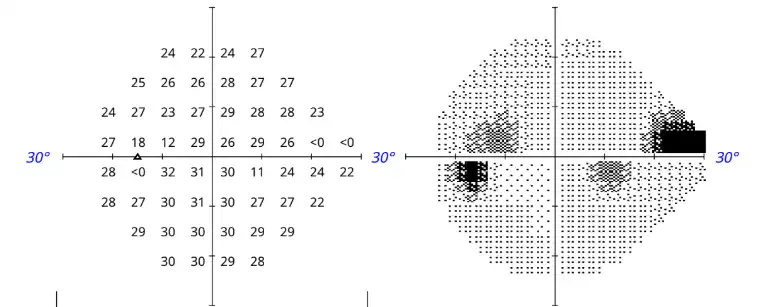
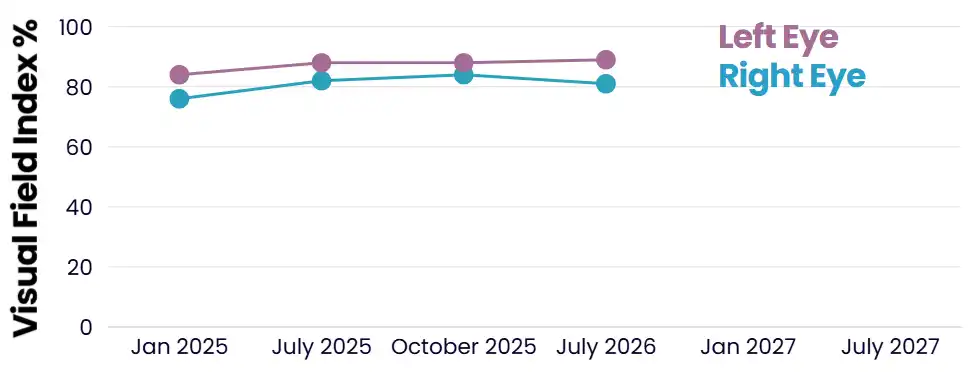
This serves to highlight the importance of glaucoma screening, especially in high-risk patients or patients with a strong family history of glaucoma.
When to Consult an Ophthalmologist

Consider arranging a glaucoma assessment when:
- A parent, sibling or child has glaucoma
- Several relatives have glaucoma
- A family member has narrow drainage angles
- You have previously been told that your eye pressure is high
- An optometrist has noticed a suspicious optic nerve
- You are over 40 and have never had a comprehensive eye examination
- You have unexplained peripheral vision changes
- You have been using steroid medication for an extended period
At OneVision Eye Specialist & LASIK Centre, a glaucoma evaluation can be tailored according to your family history, eye anatomy and individual risk factors.
Early detection cannot restore optic-nerve tissue that has already been lost, but appropriate monitoring and treatment may help protect the vision that remains.
References
- Singapore National Eye Centre. Glaucoma: Symptoms, risk factors, diagnosis and treatment
- Singapore National Eye Centre. Singapore Epidemiology of Eye Diseases Study
- Amerasinghe N, Zhang J, Thalamuthu A, et al. The heritability and sibling risk of angle closure in Asians. Ophthalmology. 2011;118(3):480–485.
- Baskaran M, Foo RC, Cheng CY, et al. The prevalence and types of glaucoma in an urban Chinese population: The Singapore Chinese Eye Study. JAMA Ophthalmology. 2015;133(8):874–880.
- Chua J, Baskaran M, Ong PG, et al. Prevalence, risk factors and visual features of undiagnosed glaucoma: The Singapore Epidemiology of Eye Diseases Study. JAMA Ophthalmology. 2015;133(8):938–946.
- Wang YX, Xu L, Yang H, et al. Genetic associations of primary angle-closure disease: A systematic review and meta-analysis. JAMA Ophthalmology. Published online March 28, 2024.
- American Academy of Ophthalmology. Primary Angle-Closure Disease Preferred Practice Pattern
- National Eye Institute. Glaucoma: Causes, risk factors, diagnosis and treatment
- Trivli A, Zervou MI, Goulielmos GN, et al. Primary open-angle glaucoma genetics: Common variants and clinical associations. Molecular Medicine Reports. 2020;22(2):1103–1110.
- Souzeau E, Burdon KP, Dubowsky A, et al. Are we ready for genetic testing for primary open-angle glaucoma? Clinical & Experimental Ophthalmology. 2018;46(3):227–236.
- Review of Optometry: Track the Hill of Vision
This article is intended for general patient education and does not replace an individual consultation, examination or diagnosis by a qualified ophthalmologist.
Have a Family History of Glaucoma?
Early detection makes all the difference. Book a comprehensive glaucoma screening with our specialists at OneVision Eye Specialist & LASIK Centre today.
Contact Us